%201%20(2).webp)
Crawlspace Evaluations for Apartment Complexes and Multi-Unit Buildings
What does a baseline evaluation of an apartment property produce?
- One report per building, with every finding labeled by the unit above it
- Dated photographs and moisture readings for each finding
- A scoped proposal that separates urgent items from phased work
Why does one unit have odor or humidity when the neighbor does not?
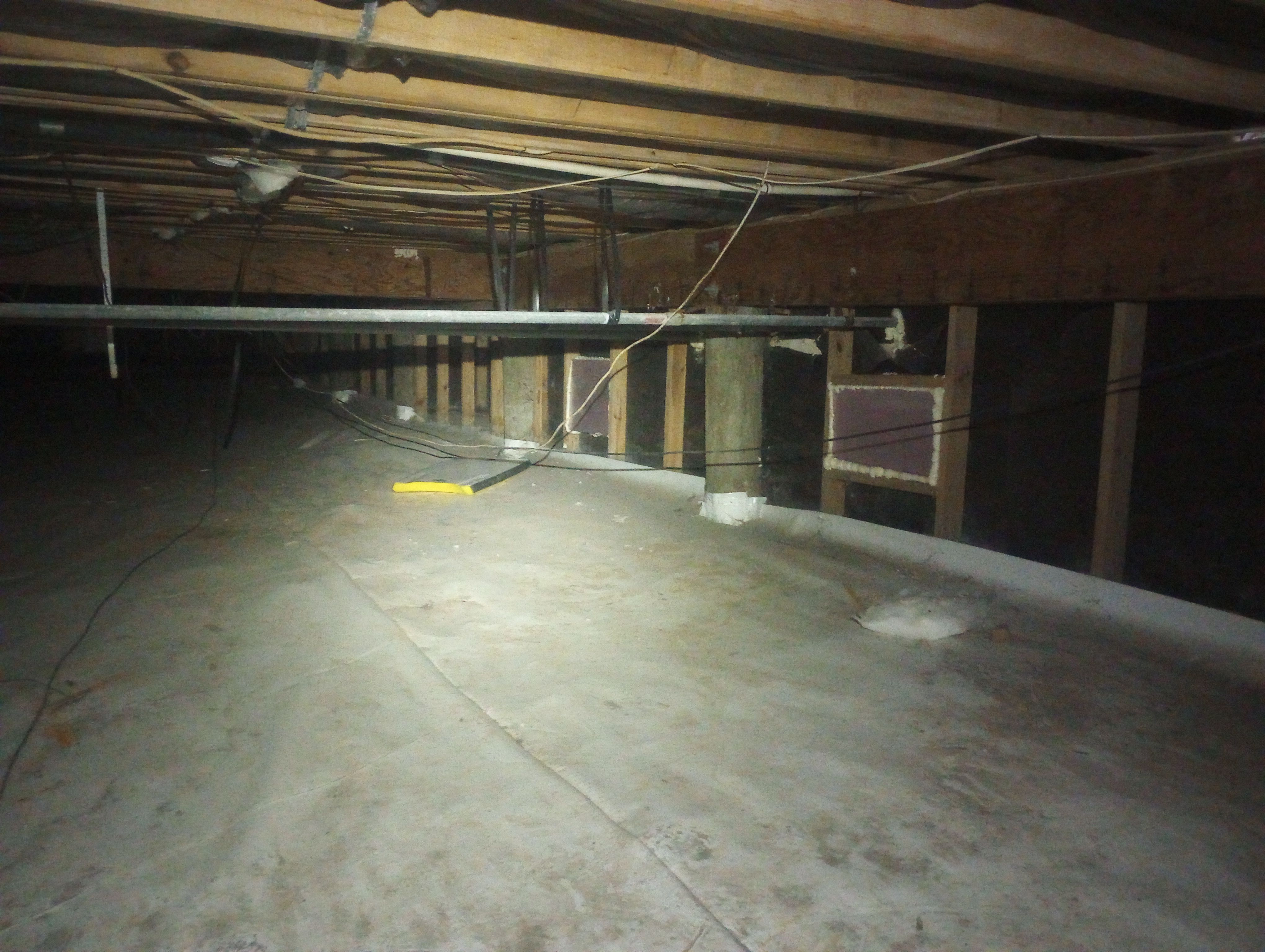
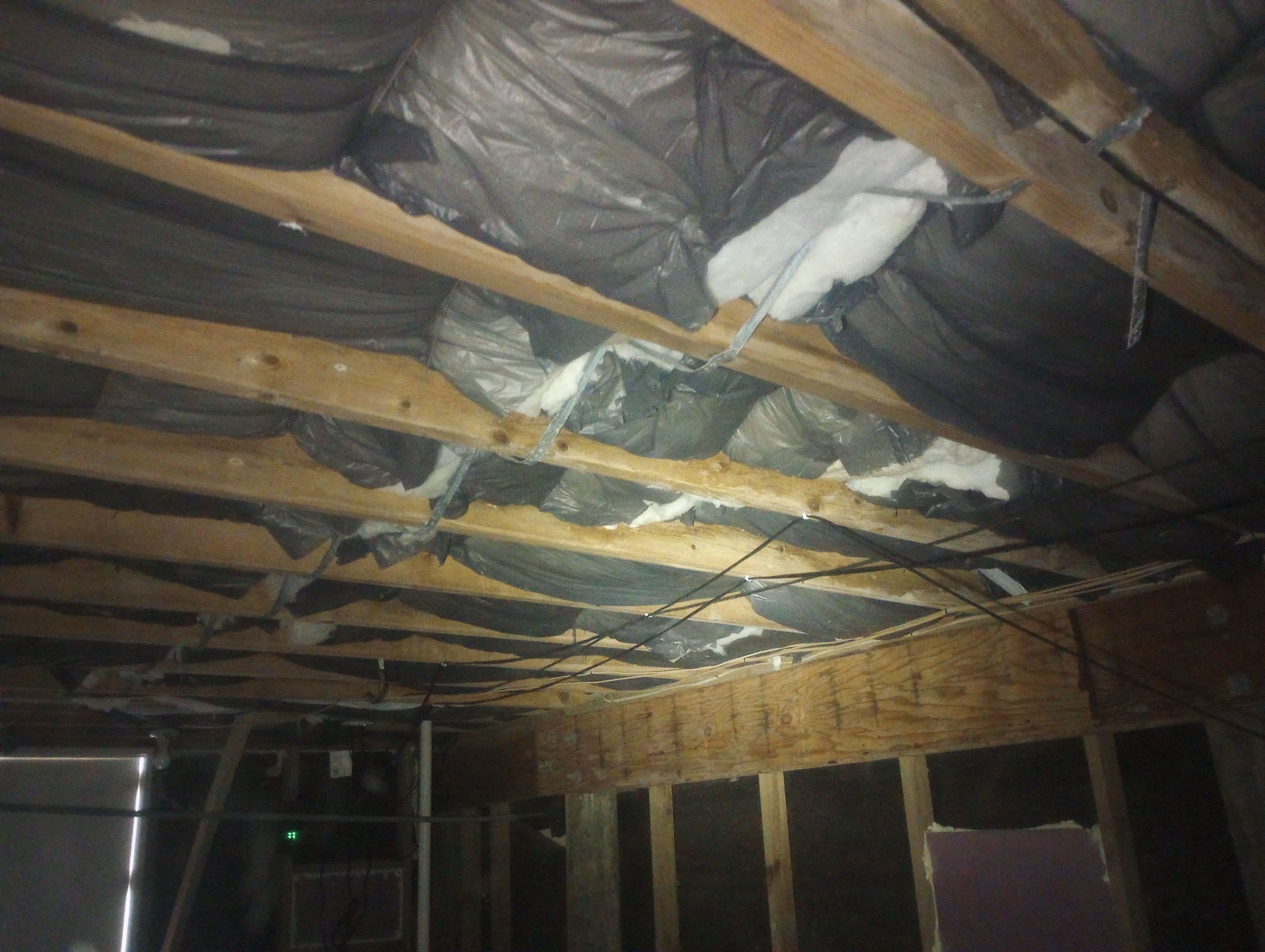
Usually because that unit sits over the corner where the water and the dead air collect. A shared crawlspace is one air volume with uneven conditions inside it. Water follows grade to the lowest corner of the footprint, so the unit above the low spot gets the standing water and the humidity that comes off it. Air behaves the same way. Vents on the windward side push air through while vents on the sheltered side let it sit, and the unit over that dead-air bay holds moisture the others shed. Clean out, meaning pump-out of standing water and removal of whatever it soaked, is the most common work we do on any building. On a multi-unit report we write that finding against one corner and one unit number, not the whole footprint. Take a typical case. A garden-style building in Brick Township, a town we work in most weeks, has eight units over one crawlspace, and the two end units on the downhill side generate a tenant complaint every August while the other six never do. Under the building, the grade falls toward that end. The downspout at that corner discharges with no extension on it. Along the same run, the vapor barrier has pulled off the wall and the pillars. The report line reads "Standing water present at rear right corner, below Units 7 and 8," with left and right anchored facing the building from the street. The work starts at that corner with a below-ground downspout extension. Inside, the crew re-seams a run of 20-mil string-reinforced vapor barrier along that wall and its pillars. An AprilAire E-series dehumidifier sized for the whole space covers the other six units, which need no work of their own.
- Low corner of the footprint: water and humidity collect under the unit above it
- Dead-air bay: a failed or blocked vent leaves one section holding moisture
- Local defect: a torn vapor barrier section or a downspout at one corner

How do you phase work when only some units have a problem?
.svg)
Prioritize by consequence
Schedule around tenants and turnovers
Answer the tenant from the report
Keep it going with the Annual Evaluation Program
Contact us to schedule your evaluation today!
.svg)
.svg)
.svg)
FAQ
Can you fix the wet unit without redoing the dry ones?
Yes, usually. The evaluation locates what is different under the wet unit, with moisture readings and a photograph for each finding, and the proposal scopes the work to that corner. Where the whole air volume needs it, a dehumidifier sized for the shared crawlspace is the one item that serves every unit. The dry units are otherwise left alone.
Do we have to evaluate every unit?
No. An evaluation covers a crawlspace, whatever number of apartments sit over it. A building with twelve apartments over one shared crawlspace is one evaluation with twelve unit labels in the report. Separate crawlspaces are separate evaluations. If the complaint is confined to one building, start there and bring the rest in under the Annual Evaluation Program.
How do you schedule around tenants?
Most access is from outside or a common area, so the crew rarely enters an occupied unit. We can usually be under the building within a day of your call, with each building's report following within 24 hours, access and tenant notice permitting. When an interior hatch is the only way in, the dates go out in writing first.
How are findings labeled when several units share one crawlspace?
By the unit above them. Each finding in the per-building report carries a dated photograph, a moisture reading, and the unit label, so an owner reading about a wet corner knows which tenants sit over it. Left and right assume you are facing the building from the street. The scoped proposal uses the same labels.
Can this be set up as a recurring program?
Yes. The Annual Evaluation Program is the recurring arrangement for property managers and multi-unit owners. It pairs seasonal evaluations with a documented report per building, adds dehumidifier filter replacement or cleaning on a schedule, and keeps warranty maintenance current on installed systems. Renewal packages are named Essential, Core, Advanced, Elite, and DehuCare+.
What can I hand to a lender, insurer, or buyer?
You can hand over the per-building report, the scoped proposal, and close-out photographs with warranty documents. Vapor barrier, French drains, drainage matting, insulation, and Mold Treatment carry a 10-year transferable warranty. For insurance, the report documents conditions as observed and supports your claim process. Coverage depends on the cause; sudden events and gradual seepage are treated differently.