Crawlspace Dehumidifier Installation in New Jersey
Is your crawlspace damp?
What it does
What does a crawl space dehumidifier do?
A crawl space dehumidifier pulls water vapor out of the air under the house once water entry has been controlled. It only does that job when it is sized to the space, hung where the air can reach it, and drained to a sump pump or a condensate pump that sends the water out of the crawlspace on its own. The box-store unit sitting on an extension cord in a low crawlspace is none of those things, and its bucket does not empty itself.
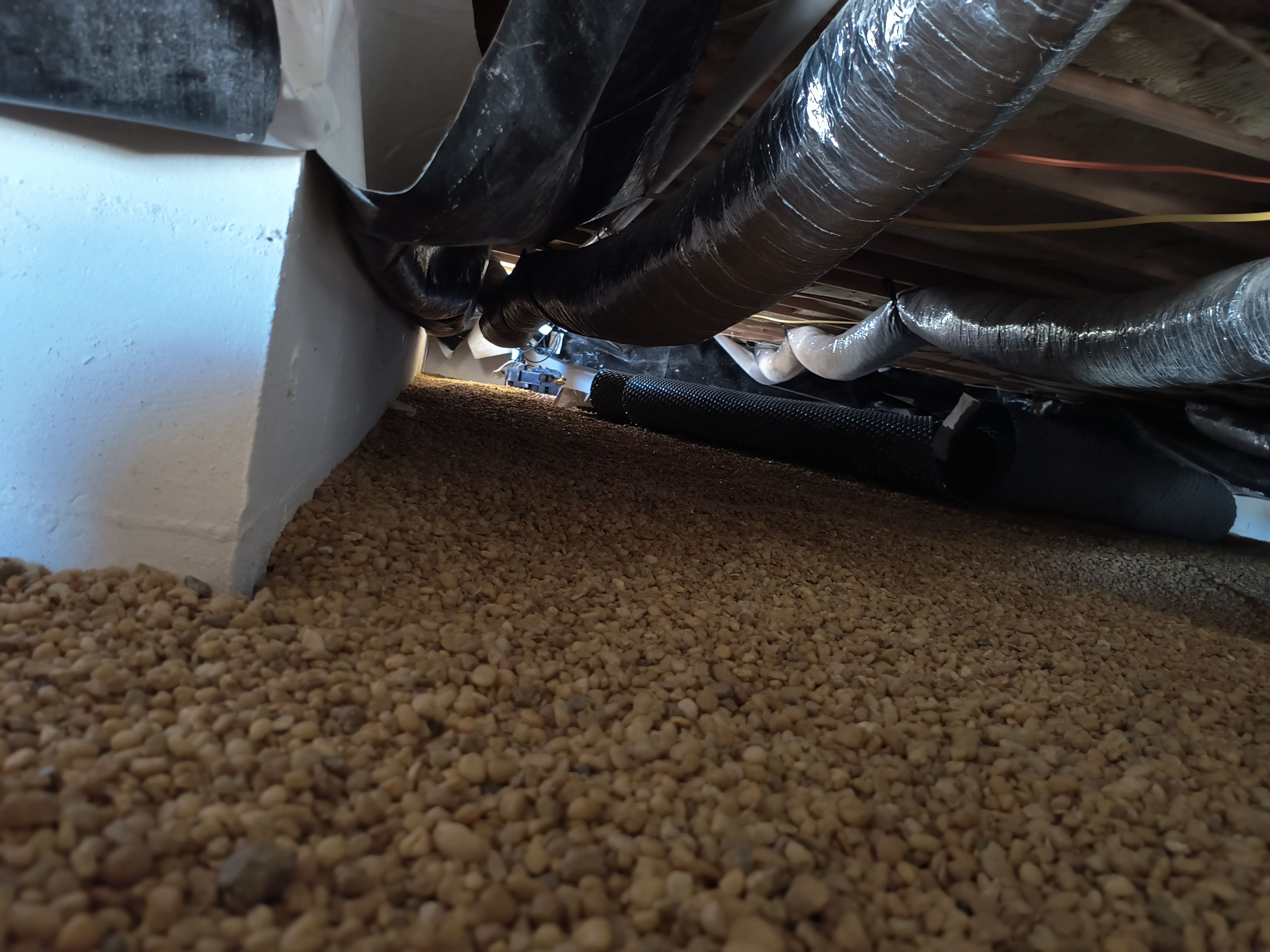
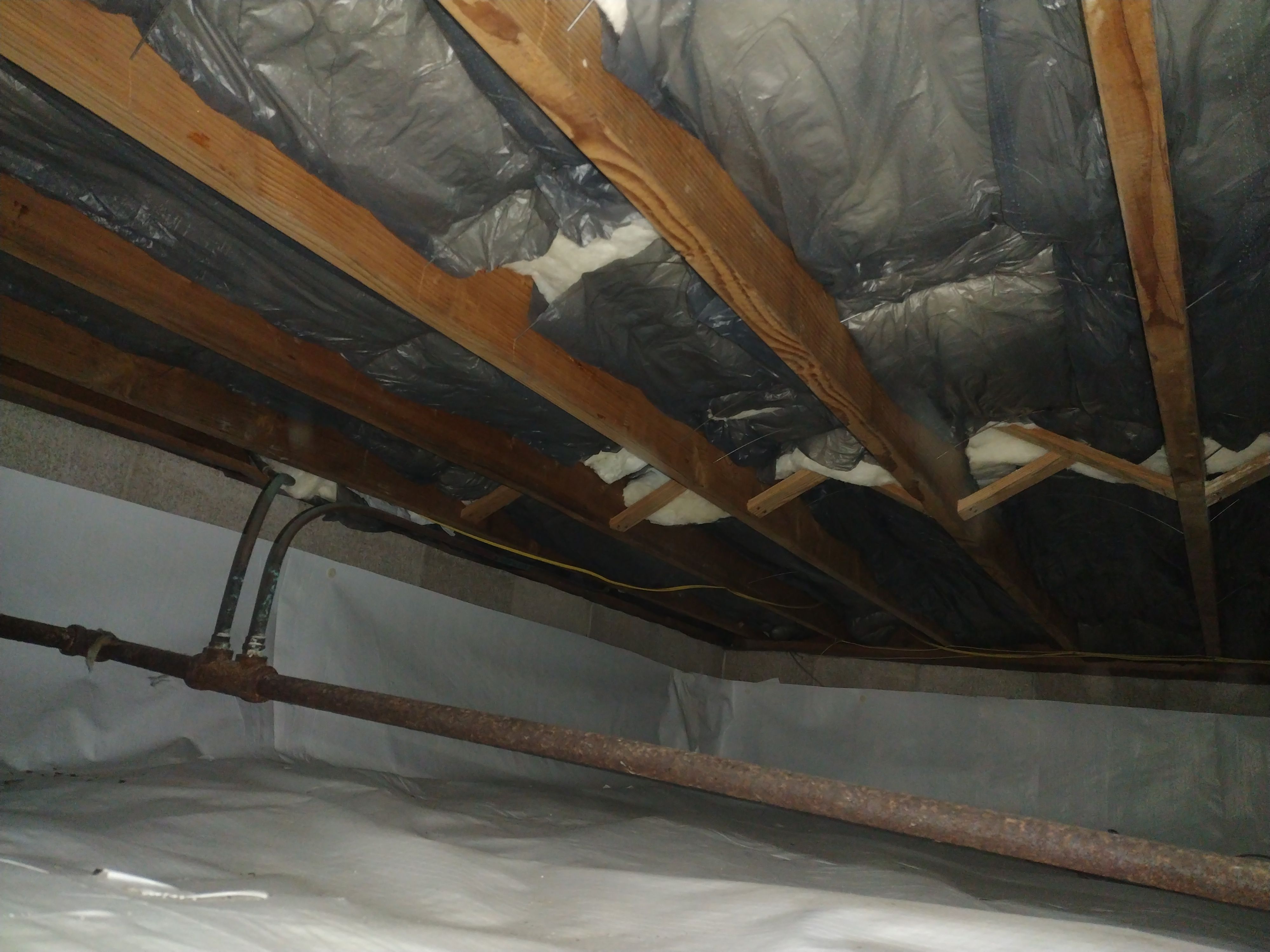
A unit that never cycles off has a reason. The vapor it removes is being replaced as fast as it leaves, by an open water source, bare soil or a vent that lets the yard back in. Once the source is handled, the same unit begins cycling off again.
When we recommend one
When do we recommend a crawlspace dehumidifier?
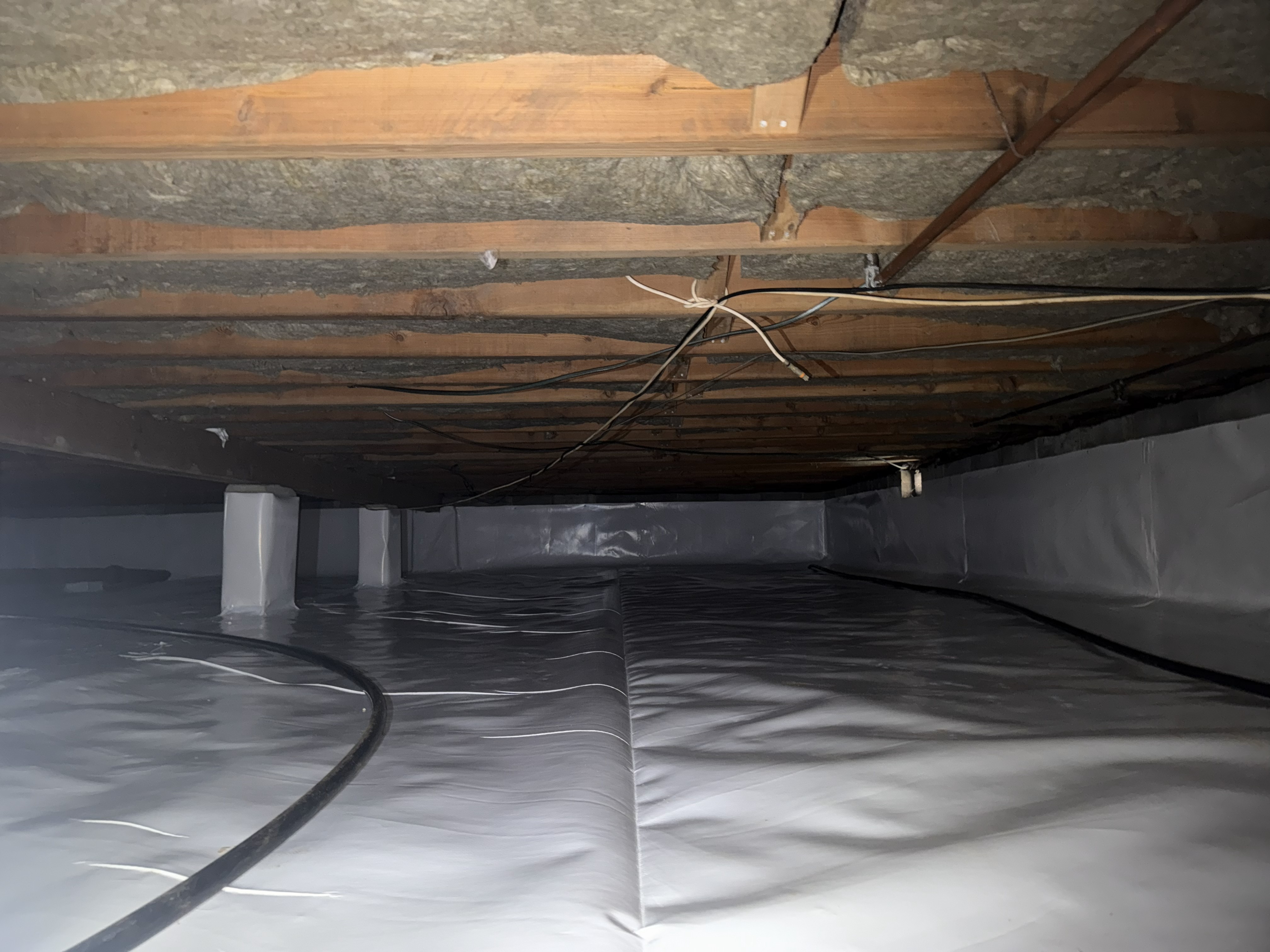
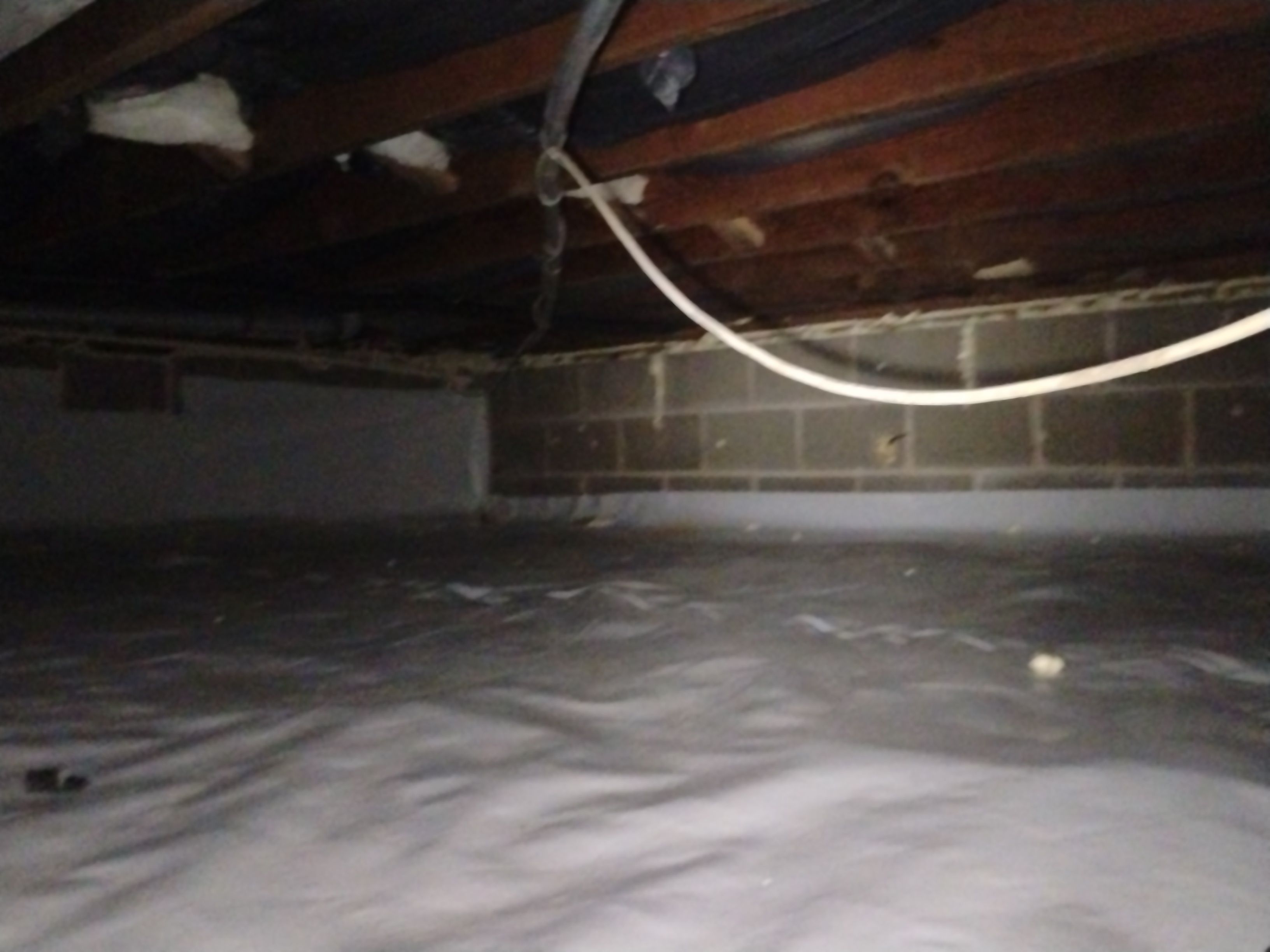
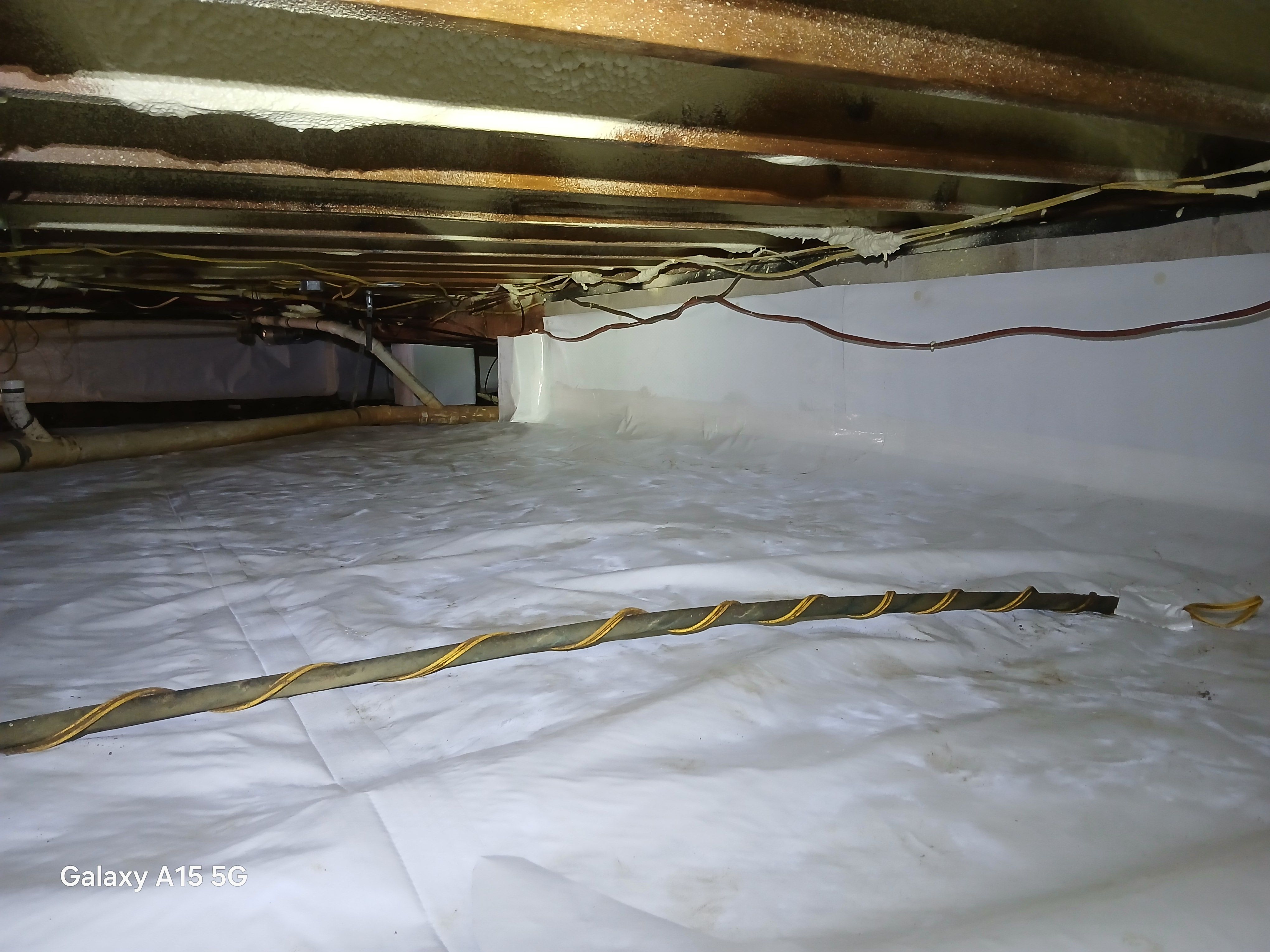
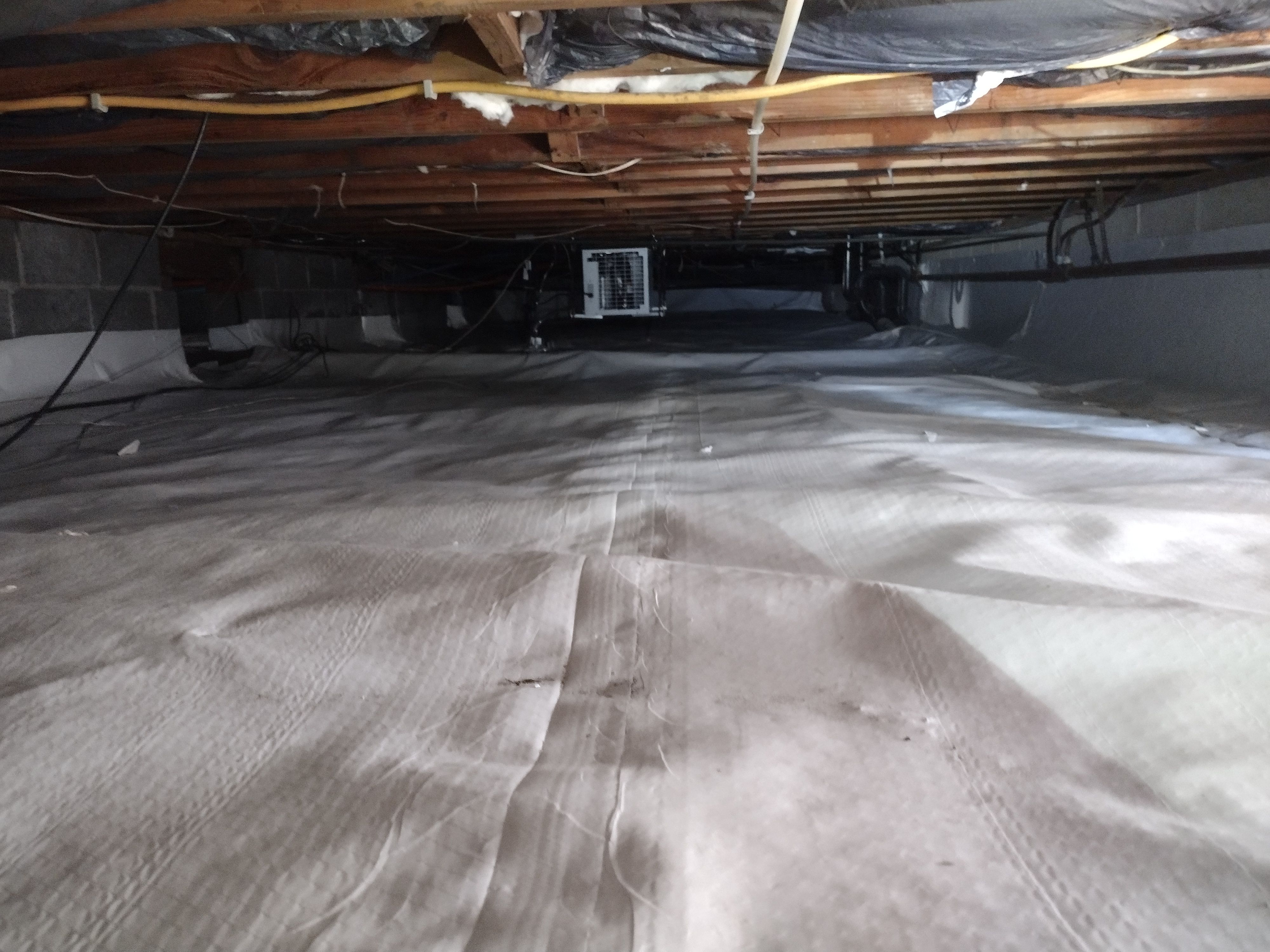
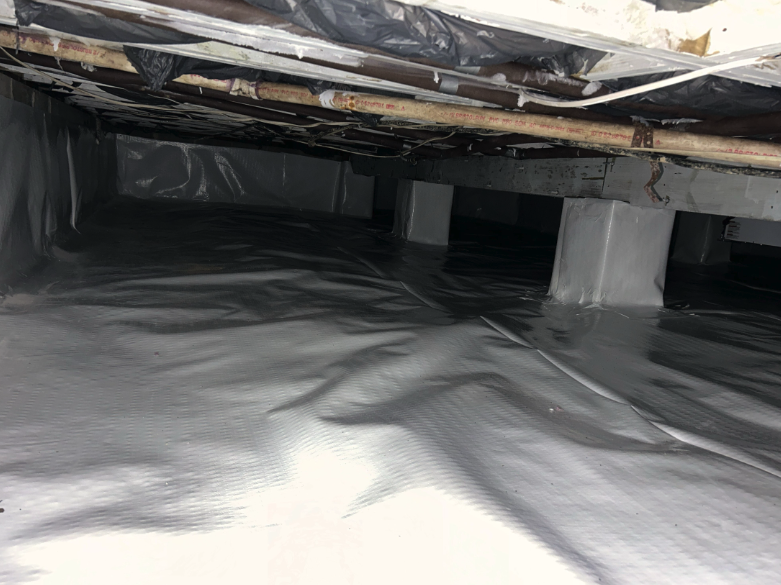
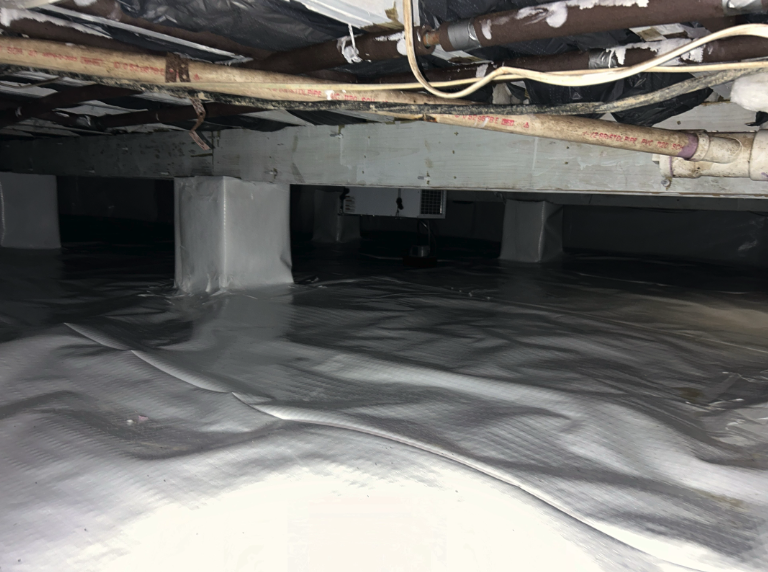
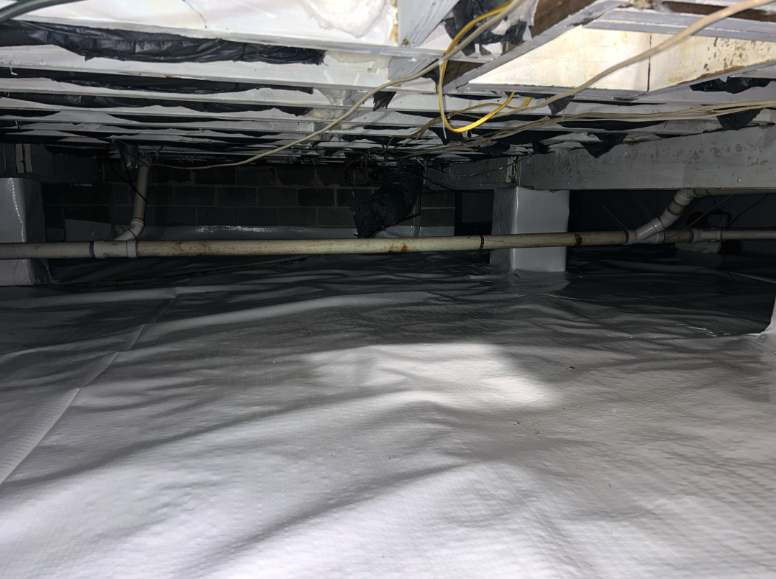
When relative humidity or wood moisture is still reading high after the water source has been handled. The units we hang mostly go under three kinds of house. The first has the vapor barrier already down on a dirt or sand floor and the humidity still up. The barrier stops the vapor at the soil, and something still has to dry the air that was already under the house. The second has a concrete floor and readings that stay high anyway, because concrete is permeable and a slab on its own does not keep the vapor down. The third was encapsulated and never given any humidity control.
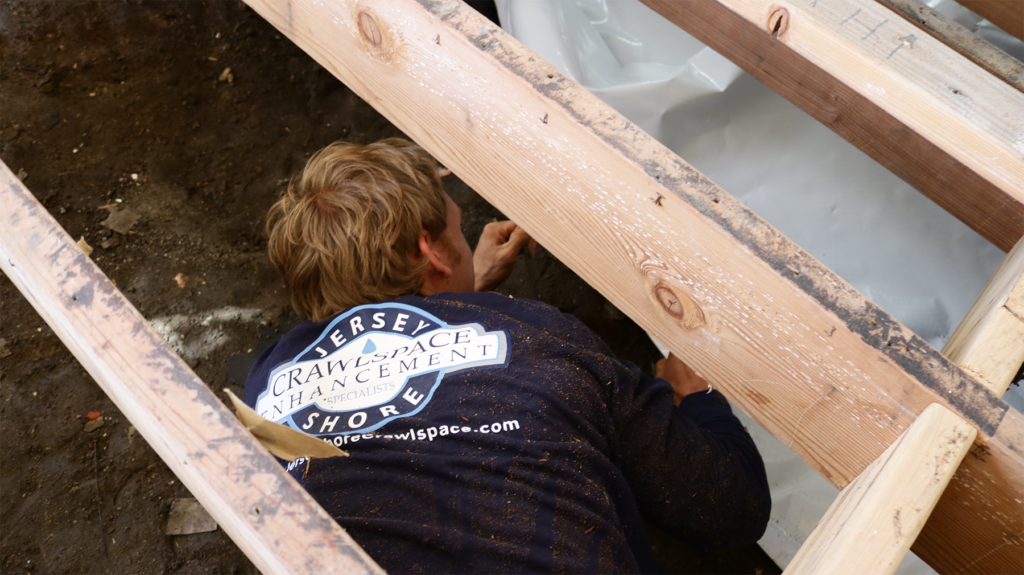
Whichever one you are standing in, a Crawlspace Evaluation reads the same things. We look for condensation on the ductwork, staining on the joists and Mold-Like Substance on the framing, and we take relative humidity and wood moisture content at several points under the house. A crawlspace in Avalon came in at 91 percent relative humidity with the wood at 23 percent and Mold-Like Substance on the floor joists, and the dehumidifier that should have been holding it was sitting in an error state with a dirty filter. The wood got a Mold Treatment, the filter was cleaned and the unit went back to holding the space below 55 percent.
Which units
Which dehumidifiers does Jersey Shore Crawlspace install?
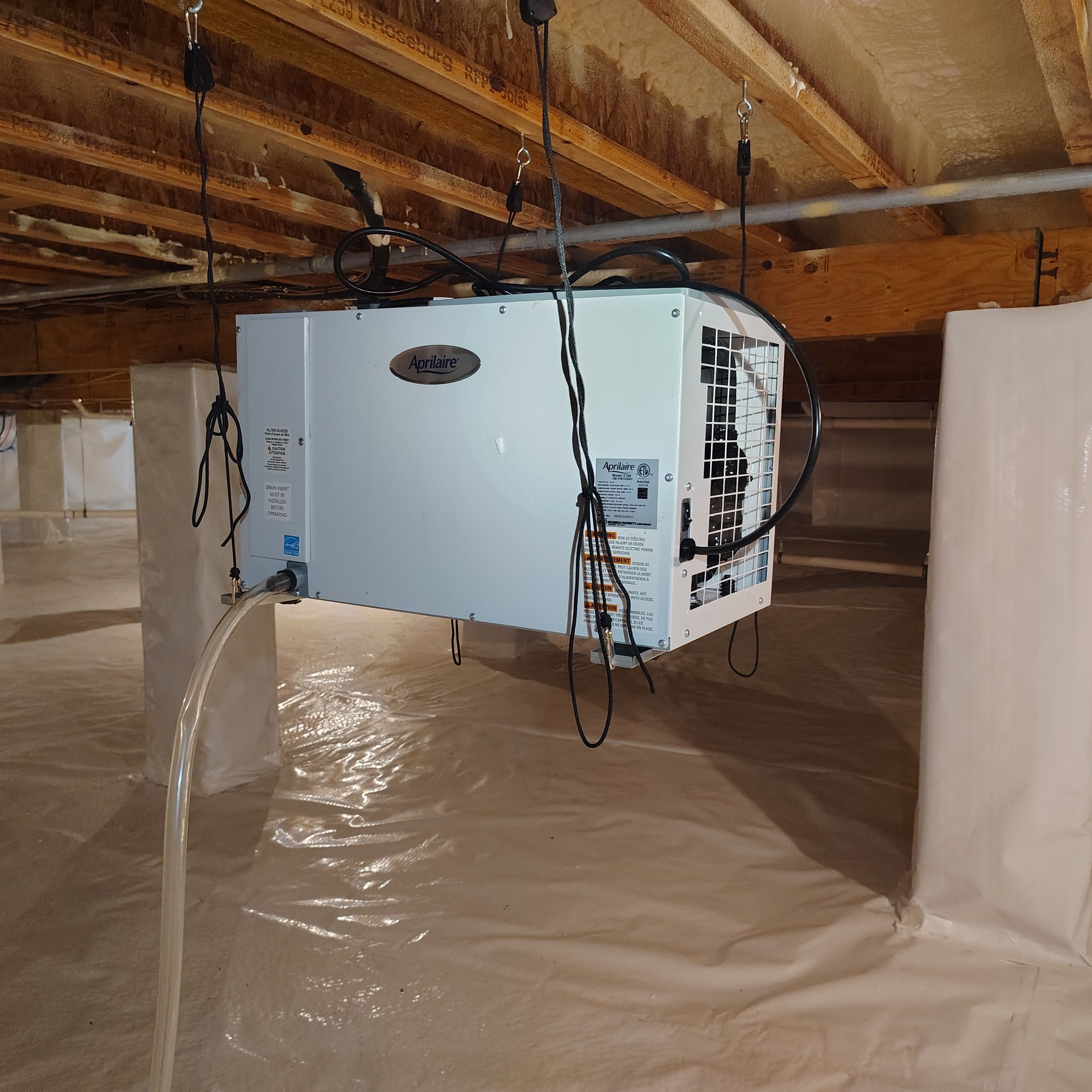
AprilAire is the name on the unit we hang, and we service Santa Fe Compact units as well. The E-series runs from the E050 at the small end through the E070 and E080 to the E100, and the W models add Wi-Fi reporting. We are certified AprilAire installers. The evaluator sizes the unit to the crawlspace, and the recommendation in the written report names the model before anything is ordered.
The dehumidifier carries its own manufacturer warranty. Our 10-year transferable warranty covers vapor barrier, French drains, drainage matting, insulation and Mold Treatment, and the dehumidifier is not part of it.
Which AprilAire unit fits your crawlspace?
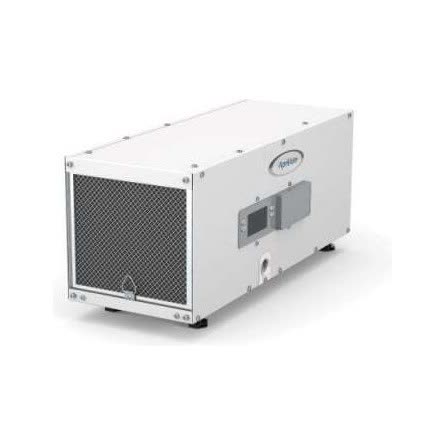

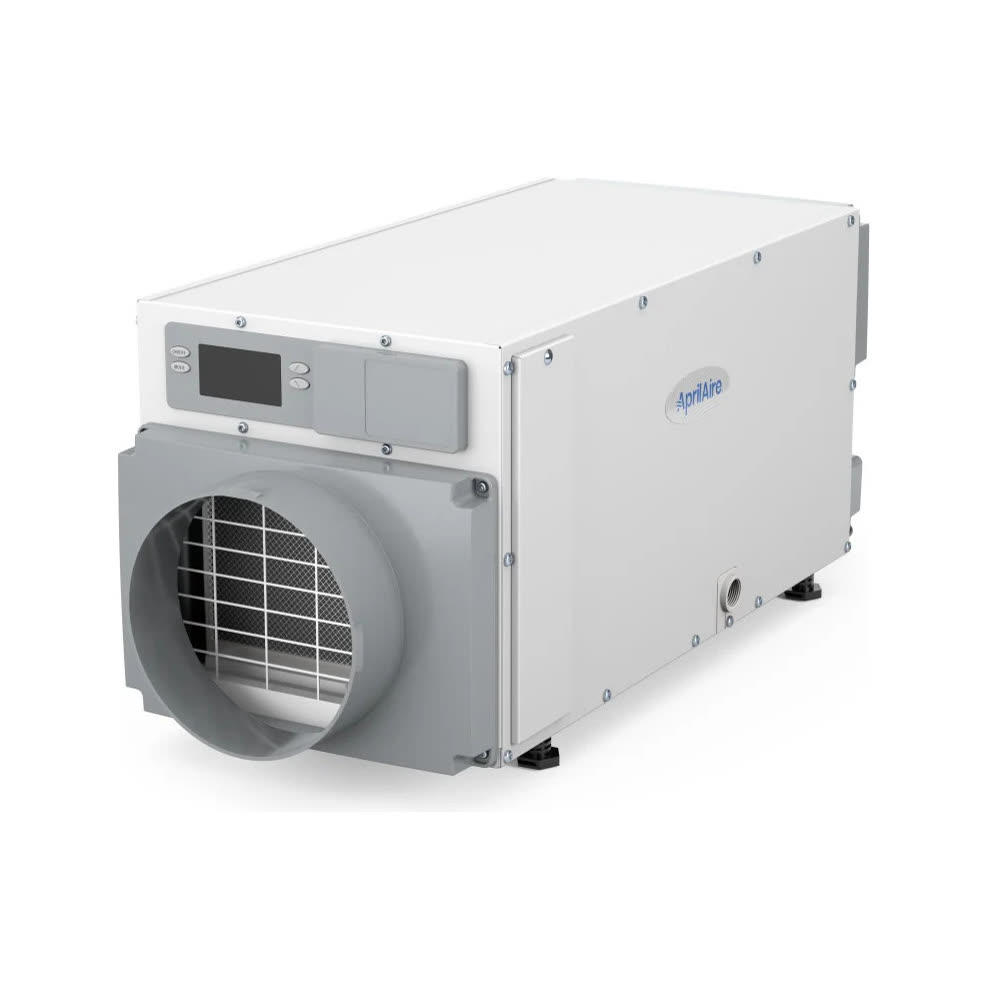
AprilAire E050
For a small crawlspace, or one that is cut into sections. Short enough to carry through a tight access door and hang where a bigger unit will not fit.
Fair Haven: two E050 units with 15 feet of duct between them, in a three-foot crawlspace that read 61 percent with store-bought dehumidifiers running in the house above.
AprilAire E070
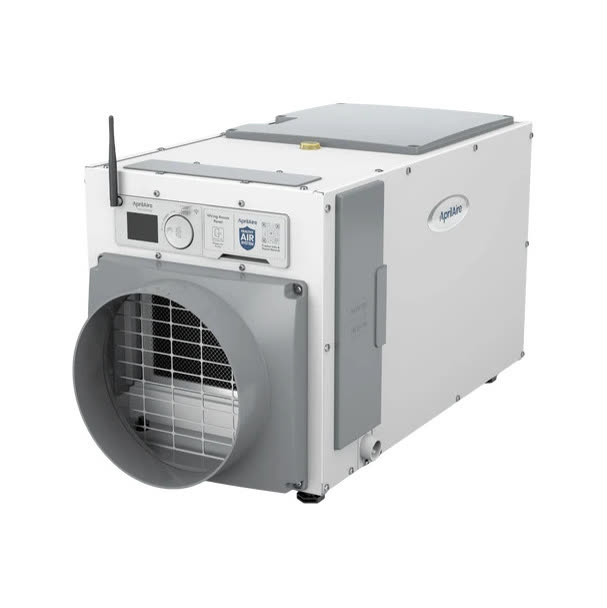
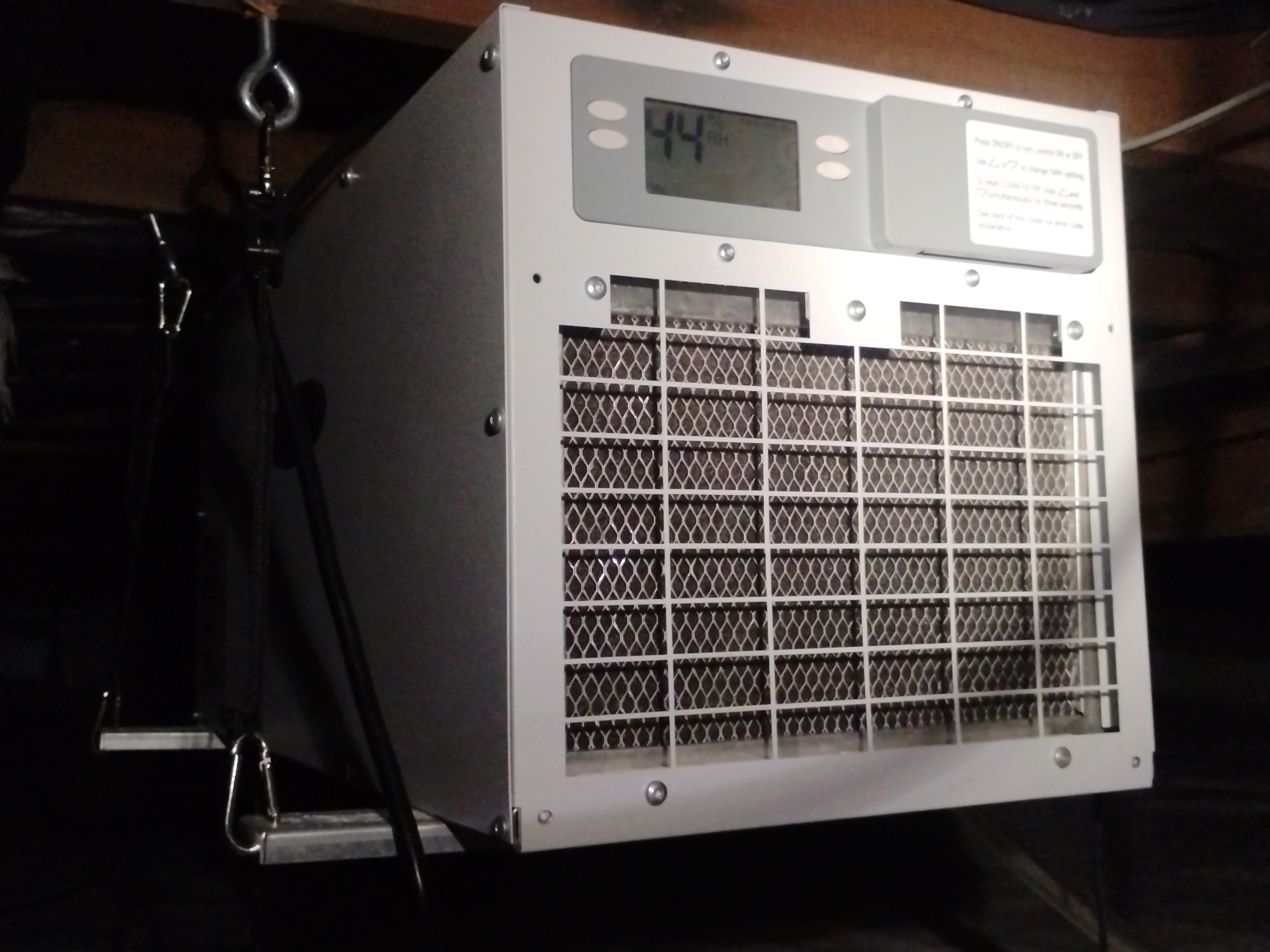
The unit most shore crawlspaces get. Hung from the joists near the middle of the space, it holds a typical crawlspace at or below 55 percent on its own.
Middle Township: one E070 with 35 feet of insulated duct, hung after a clean-out and a 12-mil vapor barrier.
AprilAire E080W
Same footprint as the E100 with a little less capacity. The W model sends the reading and any fault code to your phone, which matters when the unit is under a house you never go into.
Margate City: an E080W hung over a new vapor barrier after the crawlspace read 70 percent with condensation on the framing.
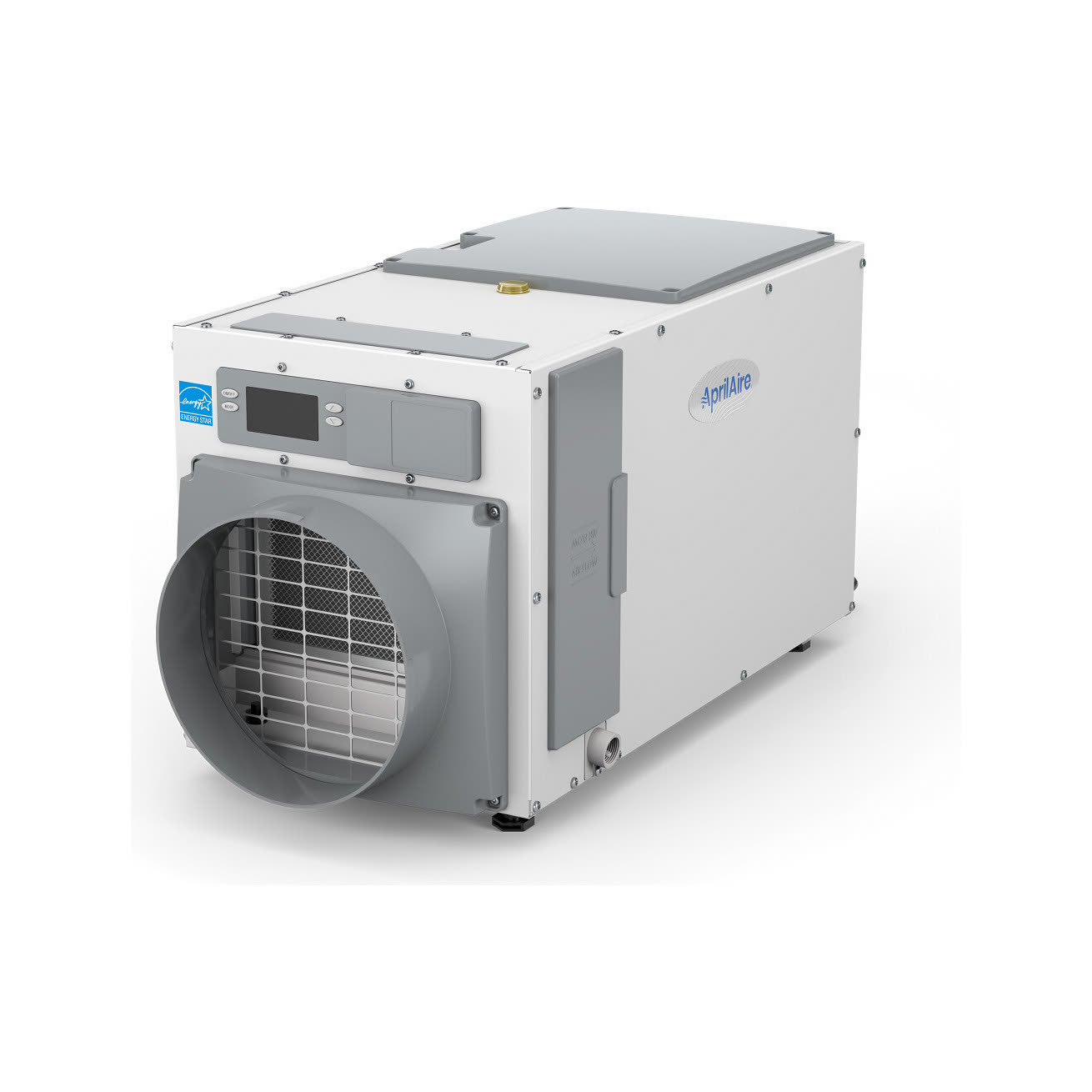
AprilAire E100
For a long crawlspace, a basement, or a space one smaller unit cannot reach the end of. Moves the most air of the four, which is what lets it feed a long duct run.
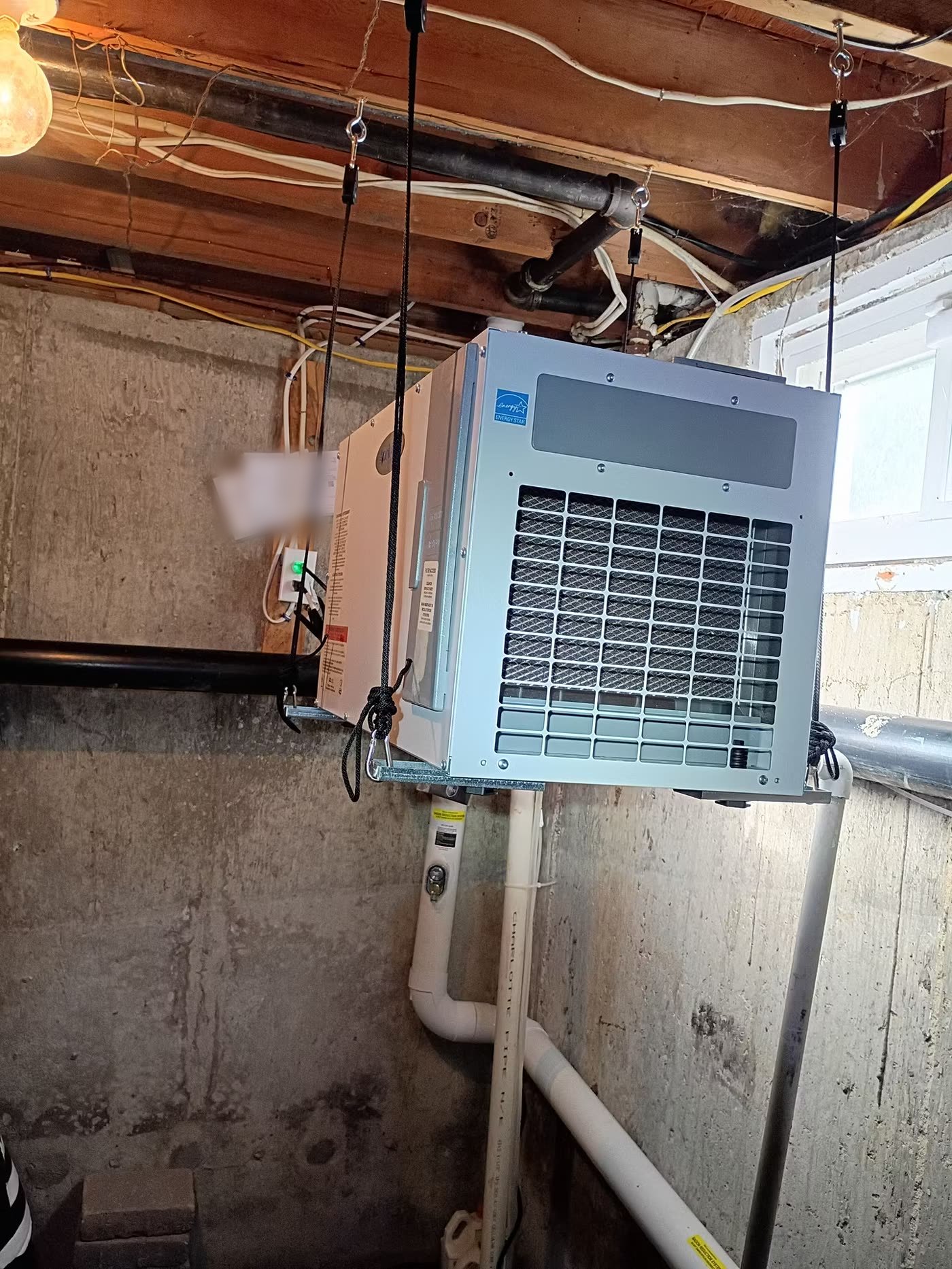
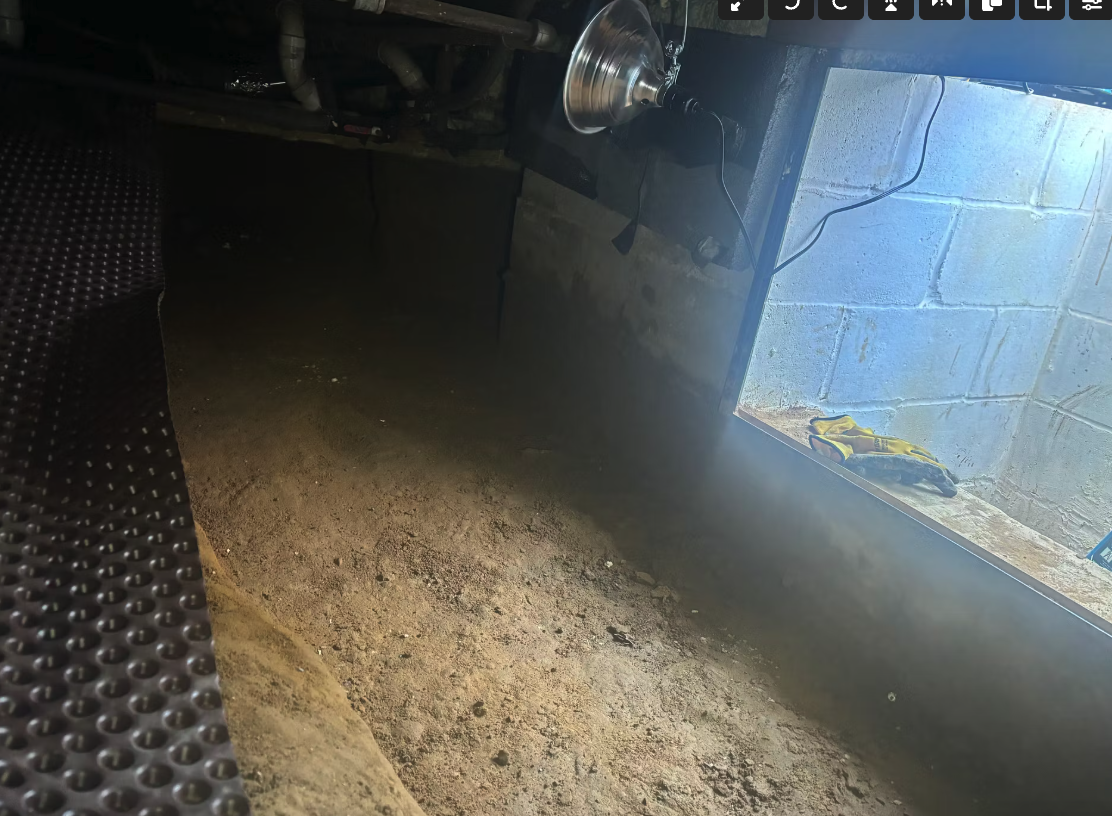
Wildwood Crest: one E100 with 65 feet of duct to reach the whole crawlspace. Holmdel: an E100 cable-hung beside the basement window, draining to the sump.
The Wi-Fi models, and what the app does
Every E-series size comes in a W version, and we install all four: the E050W, E070W, E080W and E100W. The W adds Wi-Fi and the AprilAire Healthy Air App on your phone, iPhone or Android, which matters most when the unit is under a house you never go into.
Install types
How is a crawlspace dehumidifier installed?
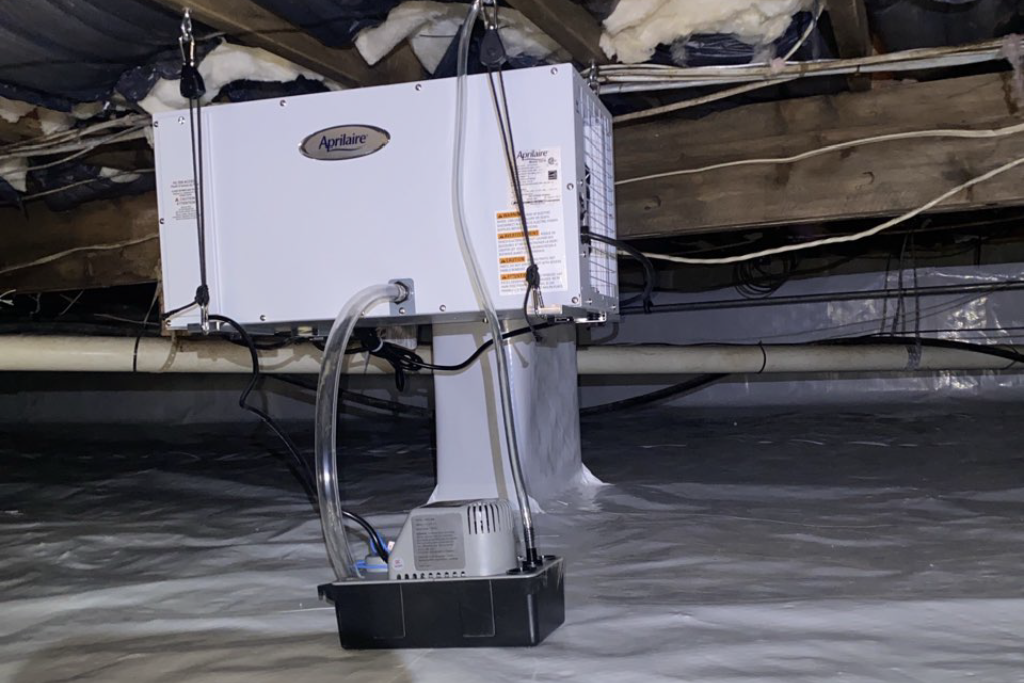
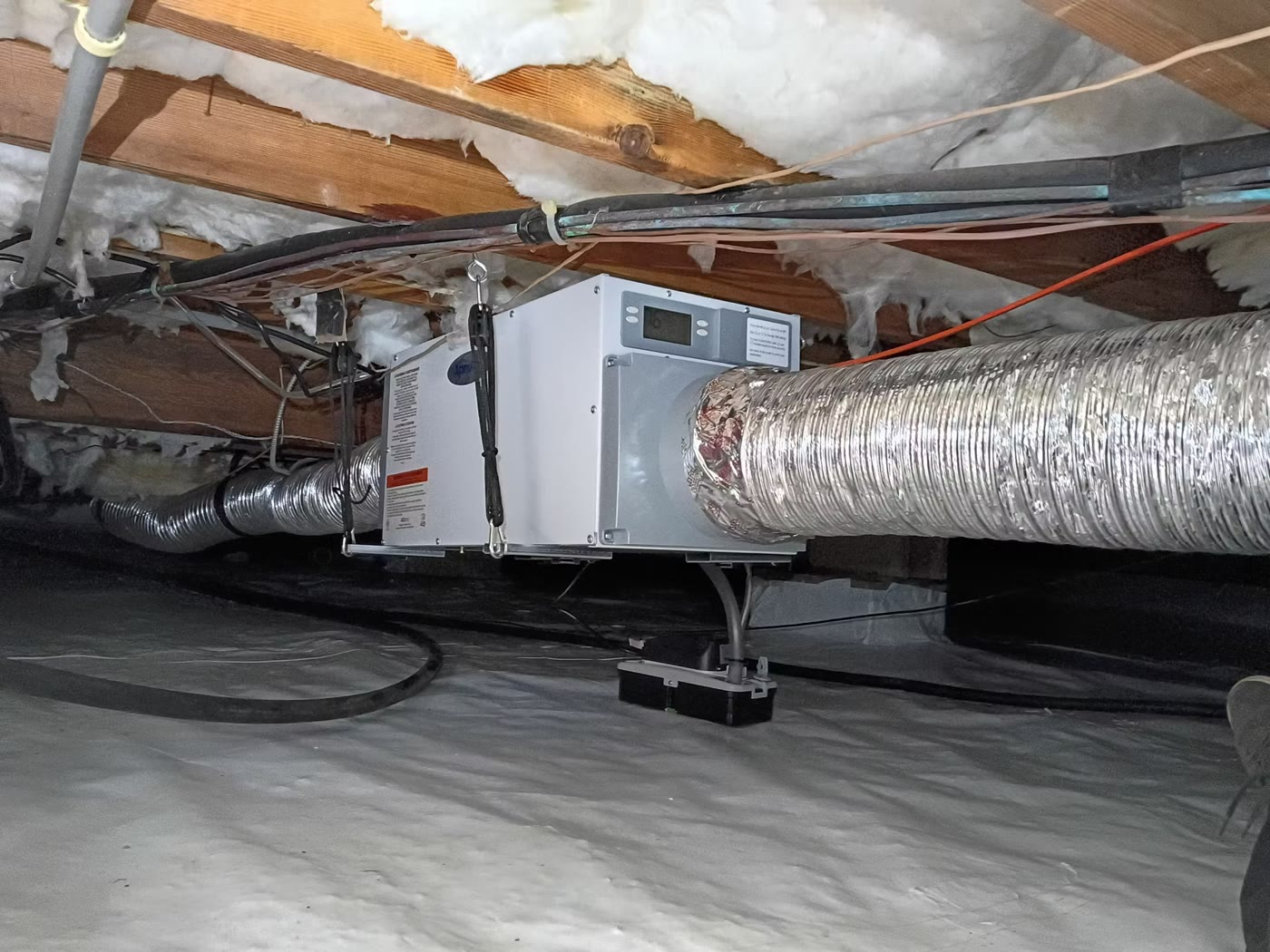
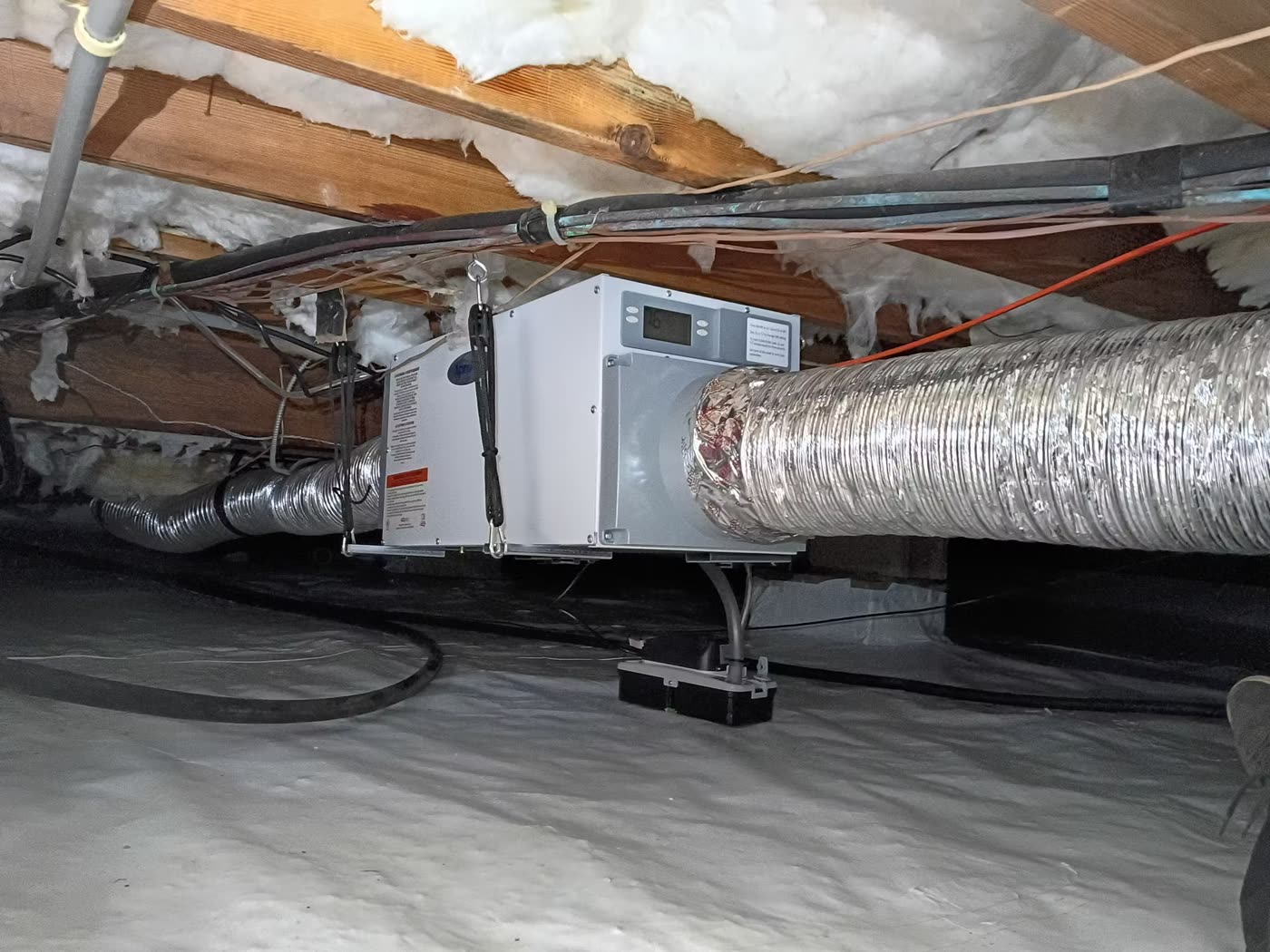
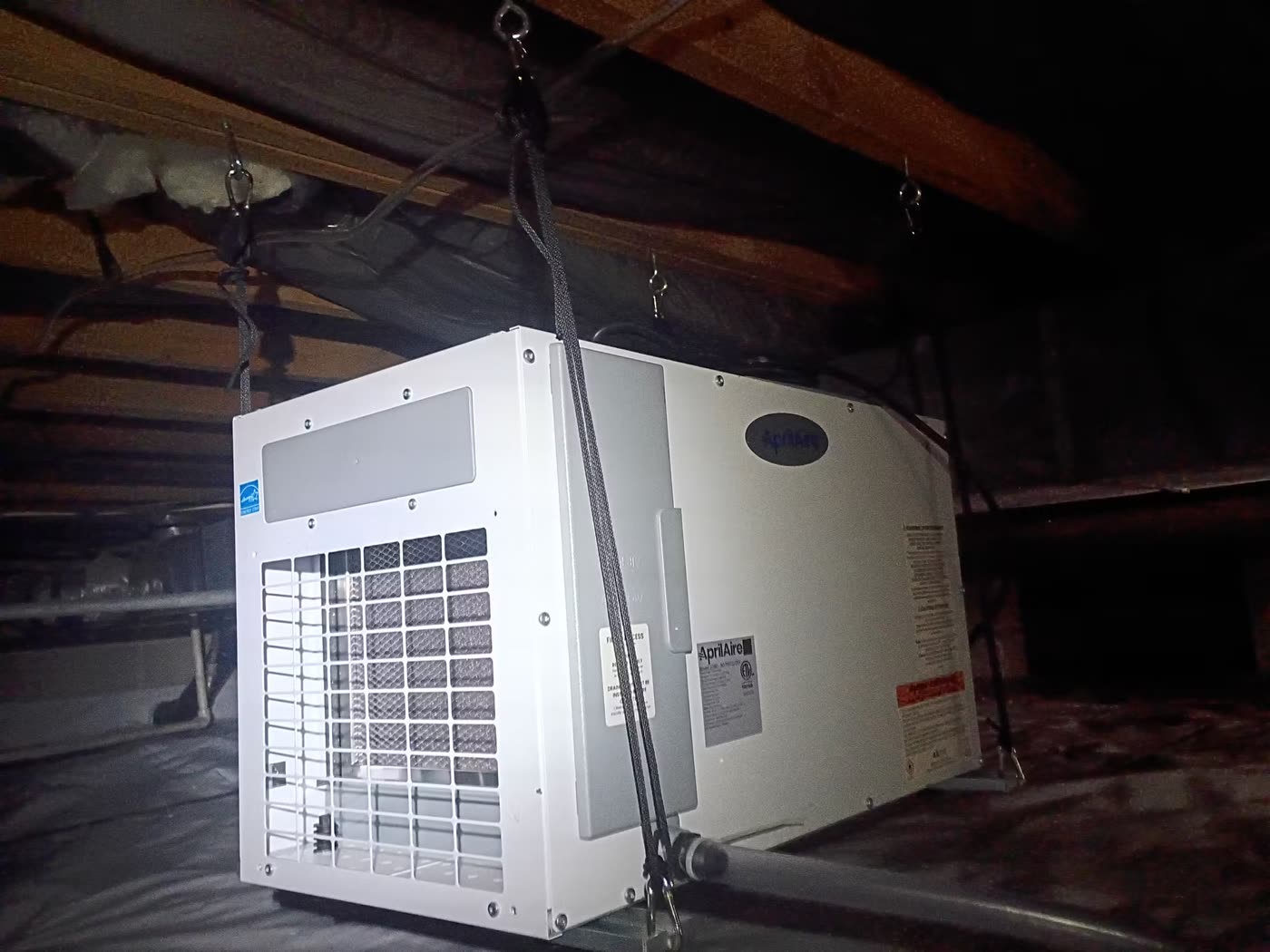
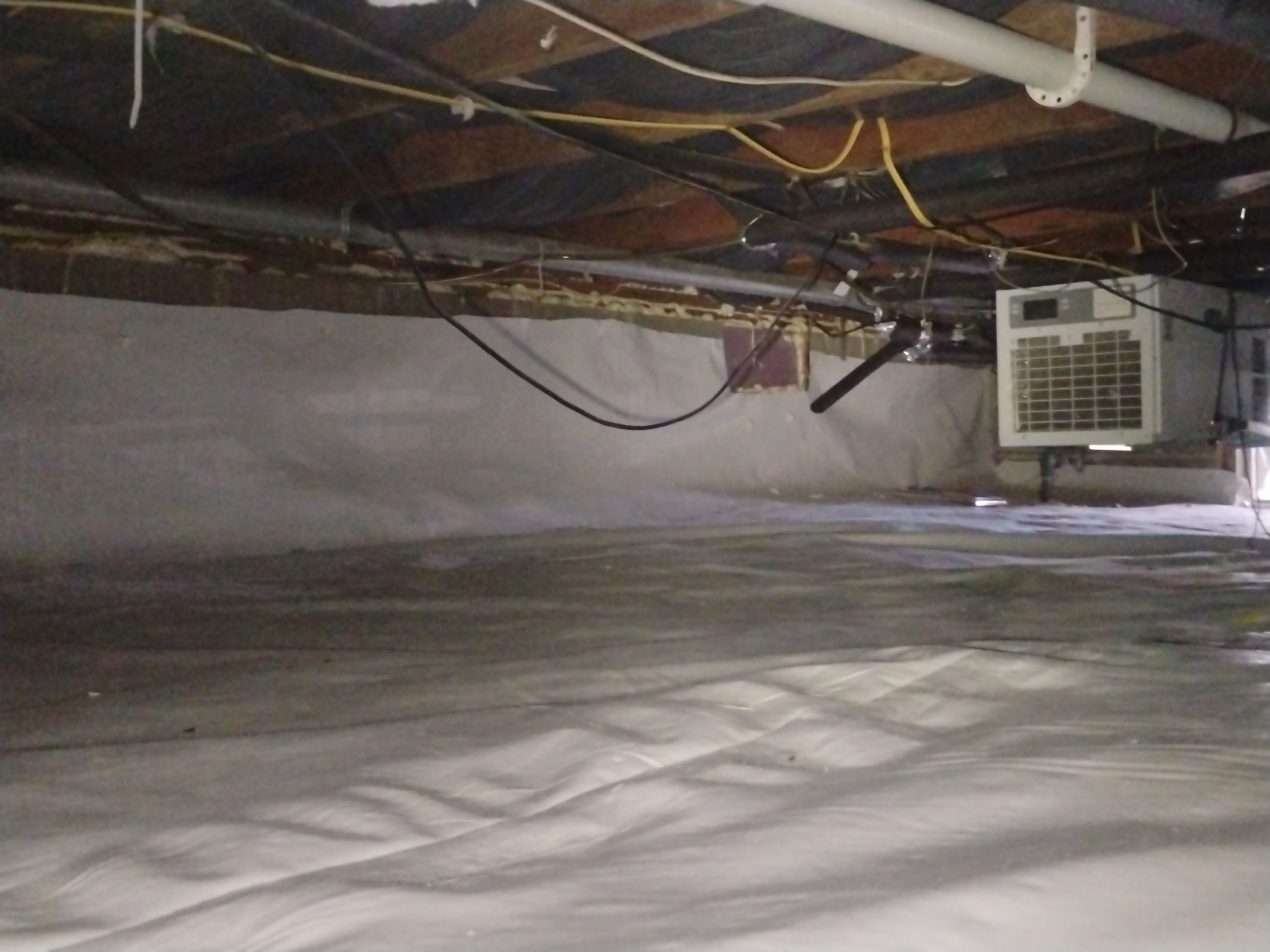
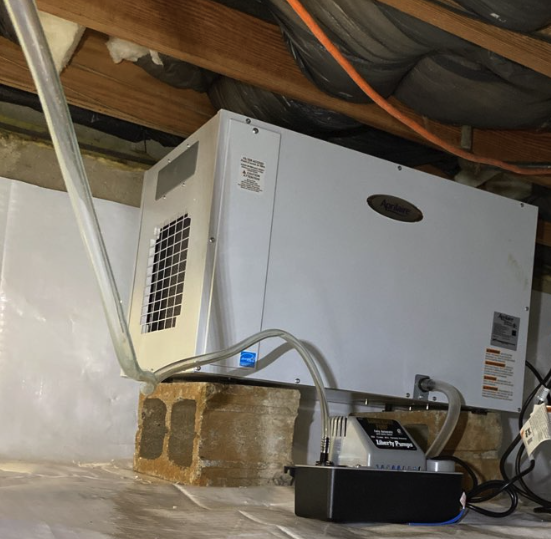
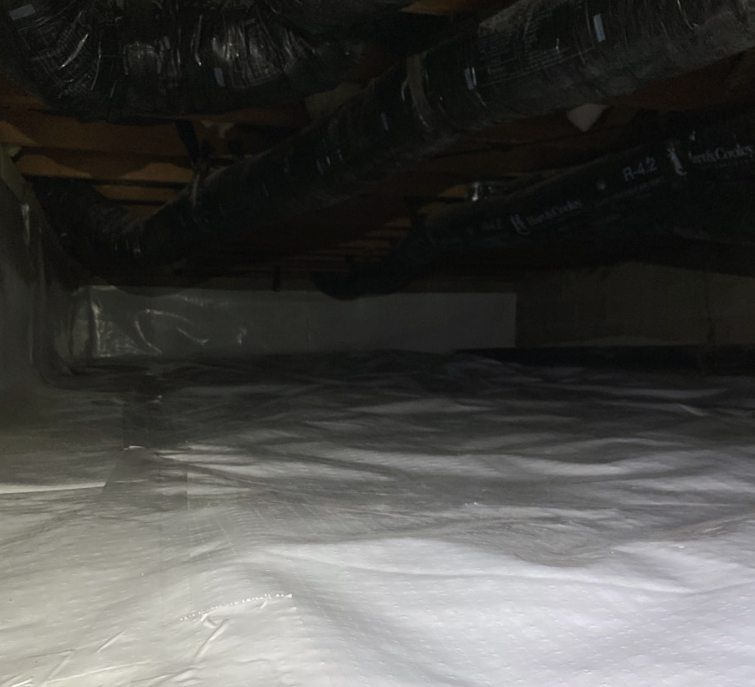
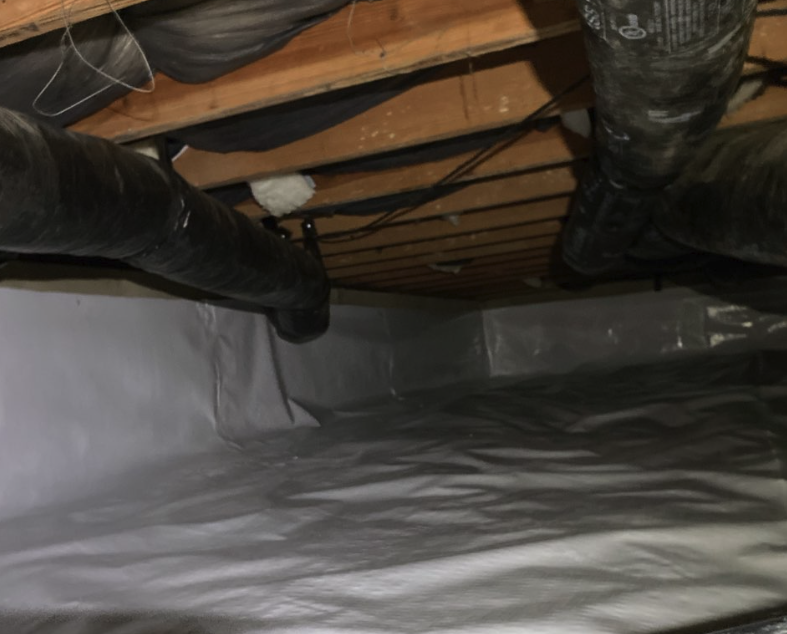
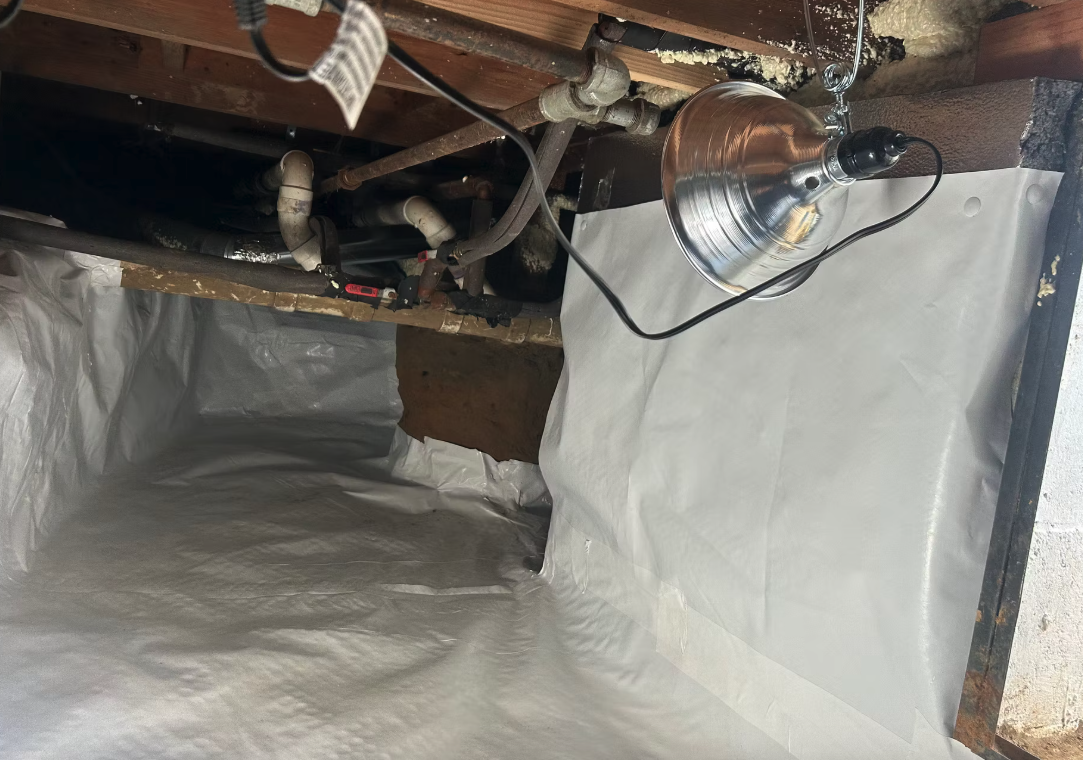
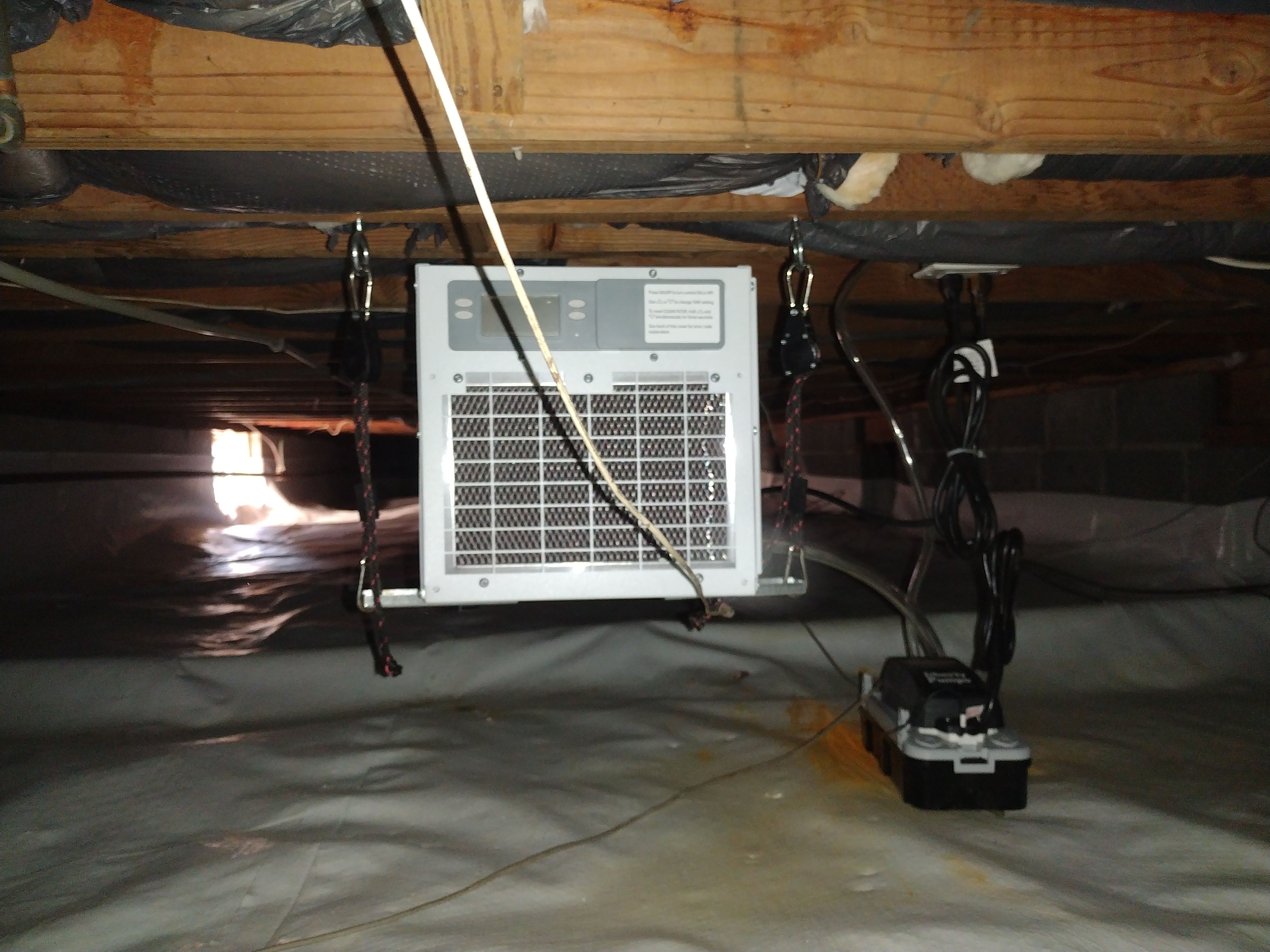
The unit hangs from the floor joists. The crew sets brackets under the joists near the middle of the crawlspace, hangs an AprilAire E-series unit from them and levels it. It sits above the vapor barrier and below the insulation, where nobody crawls around it and nothing drips on it. Air goes in one side, comes out dry on the other, and the unit cycles on its own to hold the space at or below 55 percent relative humidity.
A foundation wall or a closed-off room in the middle of the crawlspace leaves air the unit cannot reach, and that is where duct comes in. Ducting is not the standard install. A few crawlspaces are sectioned off that way, and some owners would rather stretch one unit than buy a second. There we run insulated flex duct off the supply side and carry the dry air to where it is needed. A Wildwood Crest crawlspace took 65 feet of duct from a single E100 to reach the whole space. In Middle Township the crew cleaned out the crawlspace, laid a 12-mil vapor barrier and hung an E070, then ran 35 feet of duct to carry the dry air to the far end of the space. Fair Haven got two of the smaller E050 units with 15 feet of duct between them. Brick was 12 feet added to a unit that was already in place and not reaching one end. There is no square-footage rule for it. The evaluation shows us whether your space is one room or several, and the duct run follows that.
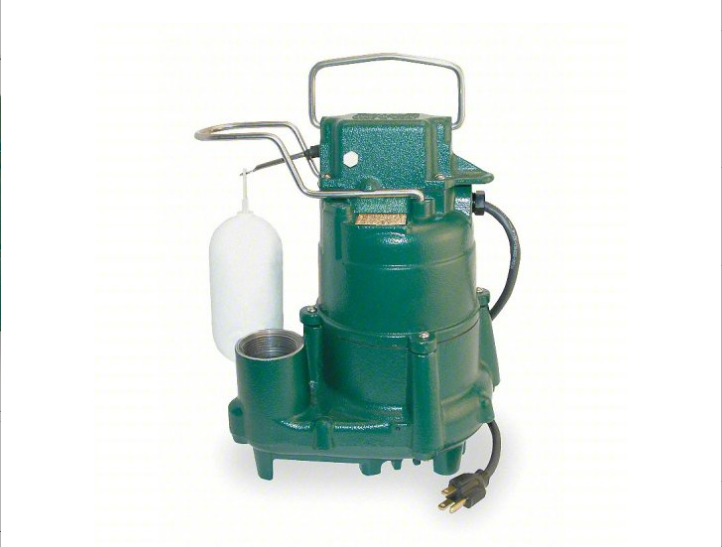
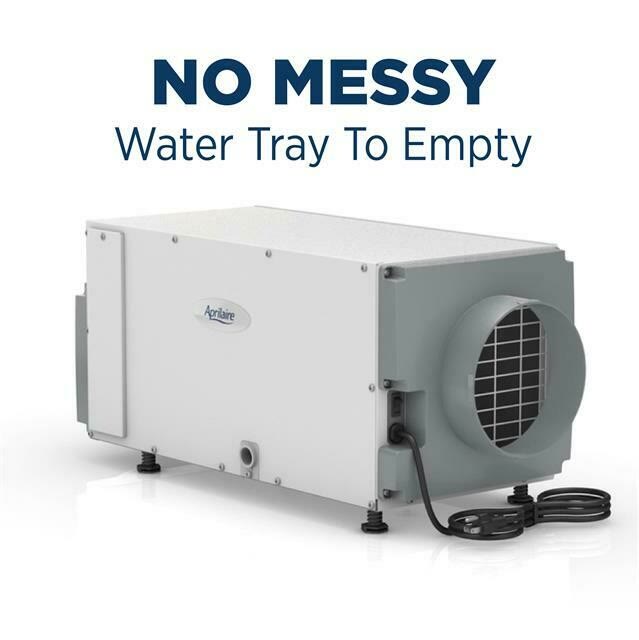
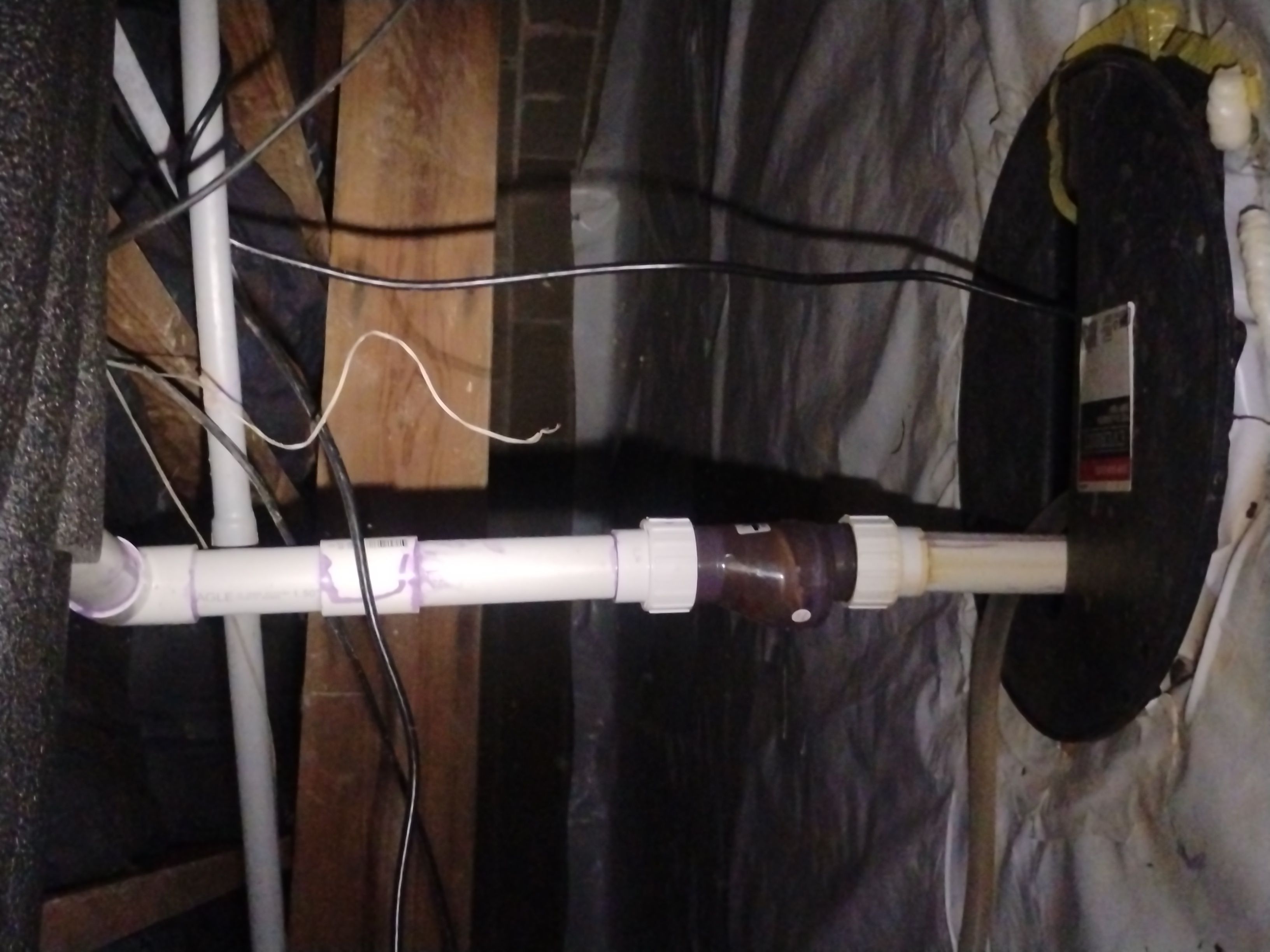
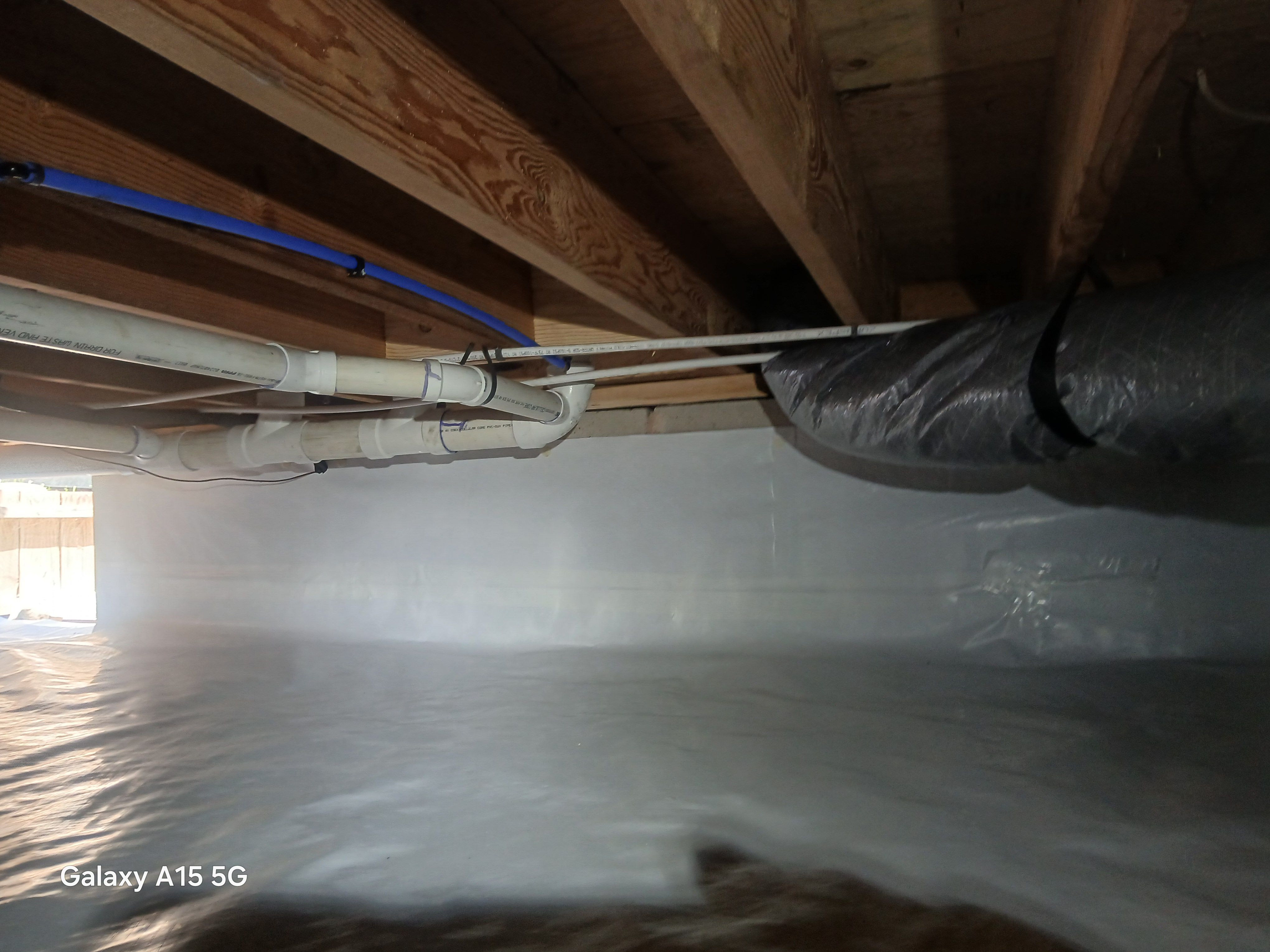
Every dehumidifier makes water, and the water has to leave the crawlspace. Where there is a sump close by, the 3/8-inch drain line runs straight into the basin and the unit empties itself, with one less part to maintain. Where there is not, a 3/4-inch line drops from the unit to a small condensate pump on the floor, and the pump sends the water out through 3/8-inch clear tubing, usually stepped up to 3/4-inch PVC on its way out of the crawlspace. The pump is a wear part. We check it on every program visit, and a replacement is covered while the pump is under warranty.
The Wi-Fi models report humidity and any fault code to your phone, and the reading reaches you without a trip under the house. The filter still has to be touched by hand. On the Annual Evaluation Program the crew logs the humidity reading at each of the three visits a year, and filter cleaning or replacement can be added to those visits as a paid add-on.


What it works with
What does a crawlspace dehumidifier work with?
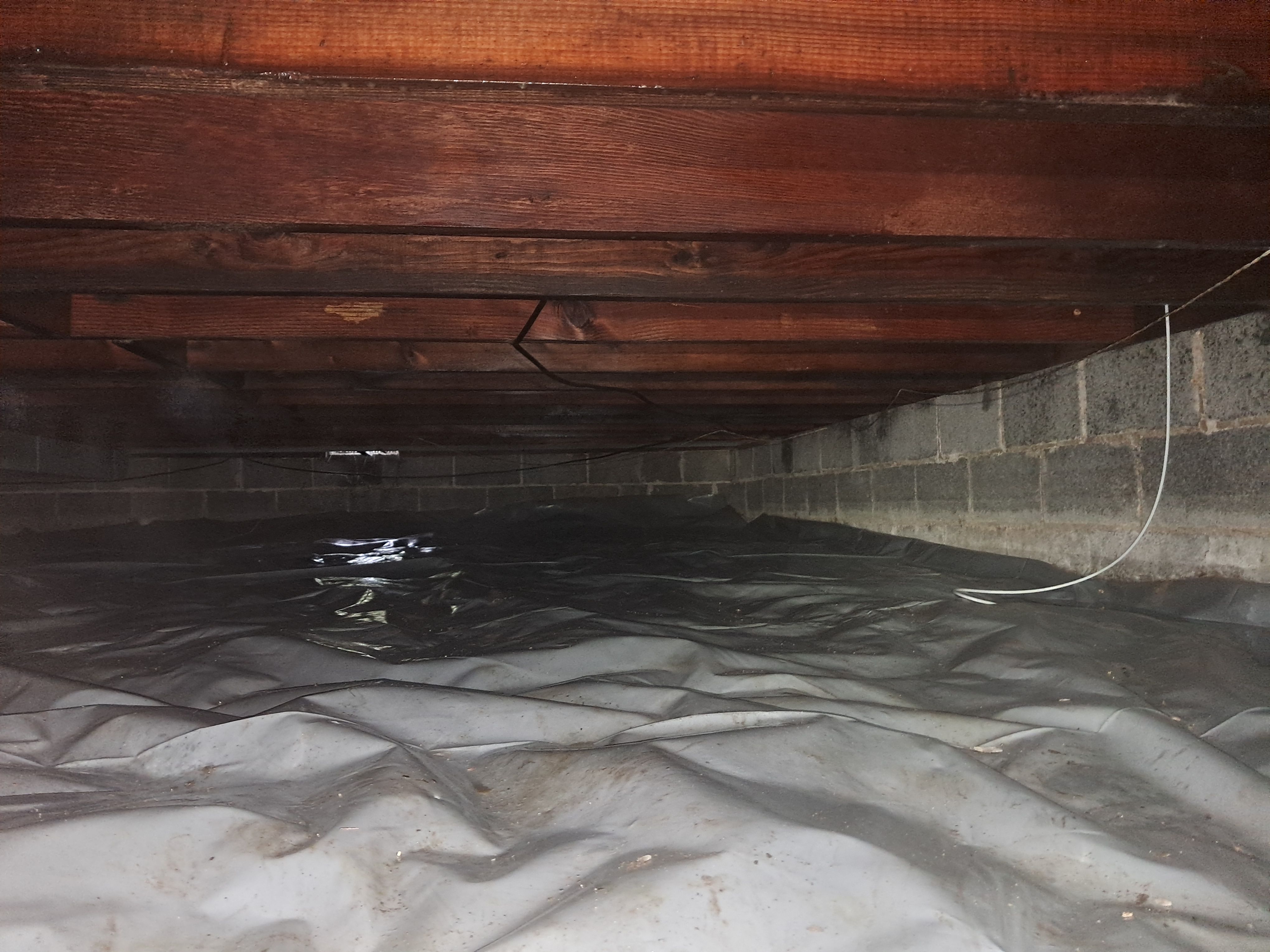
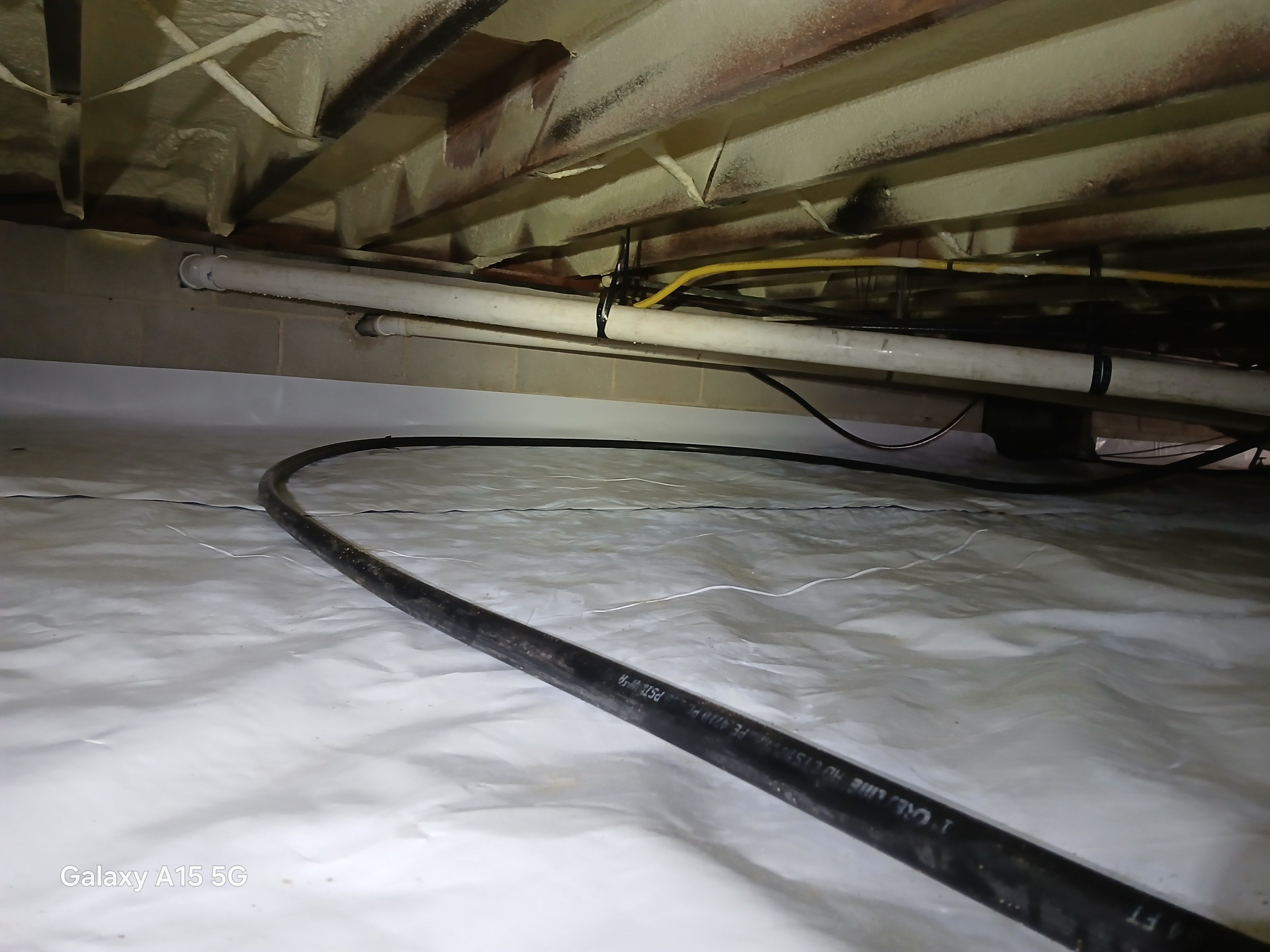
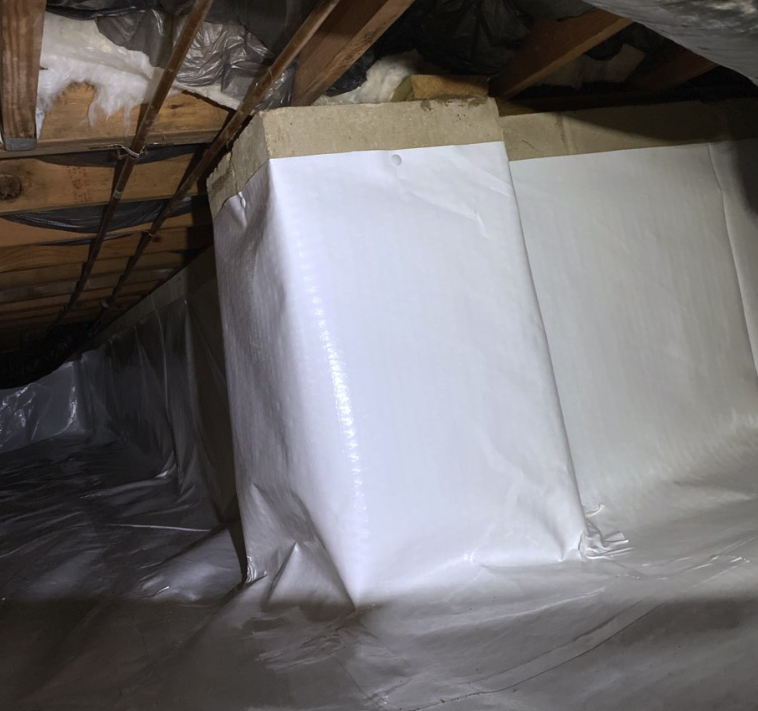
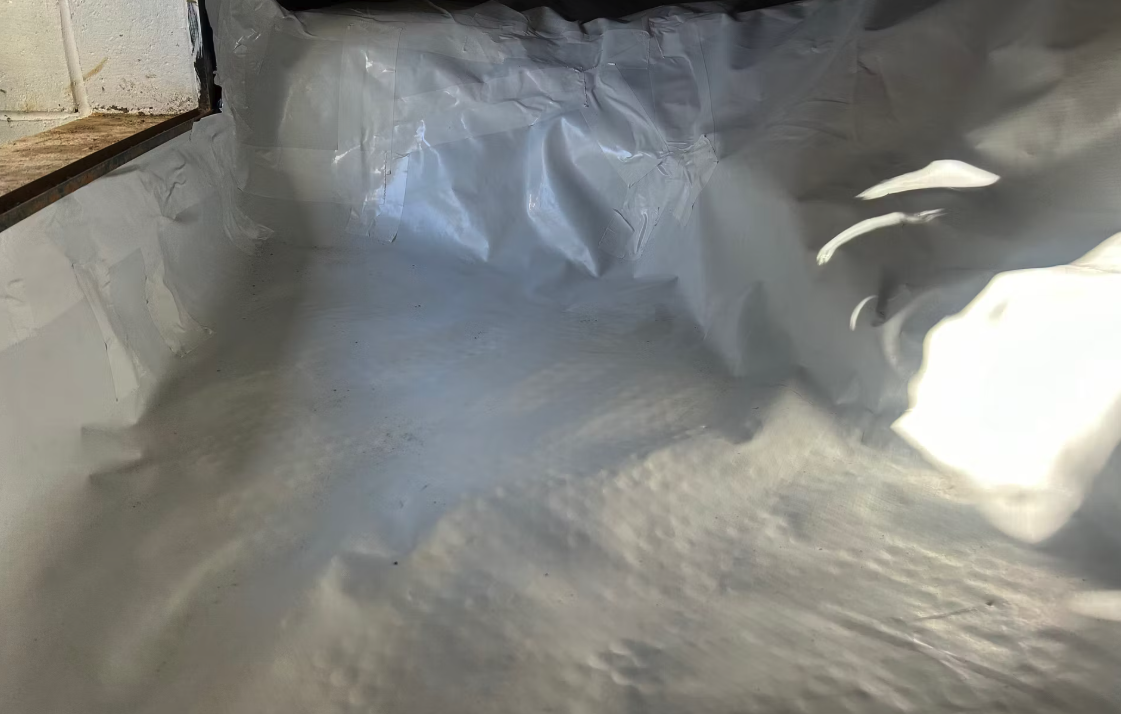
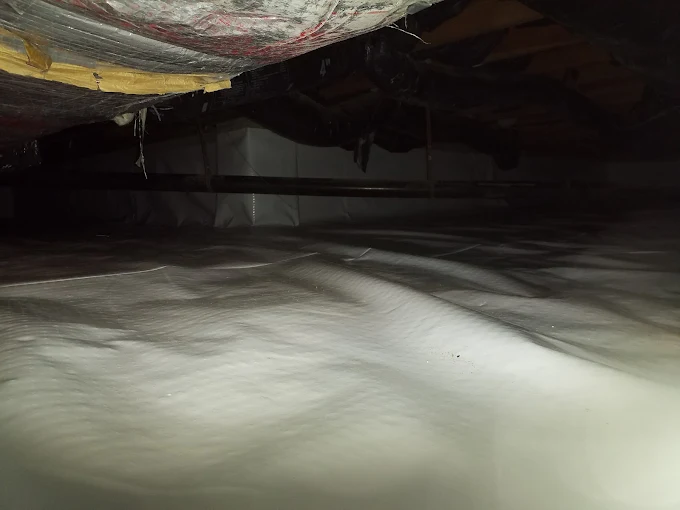
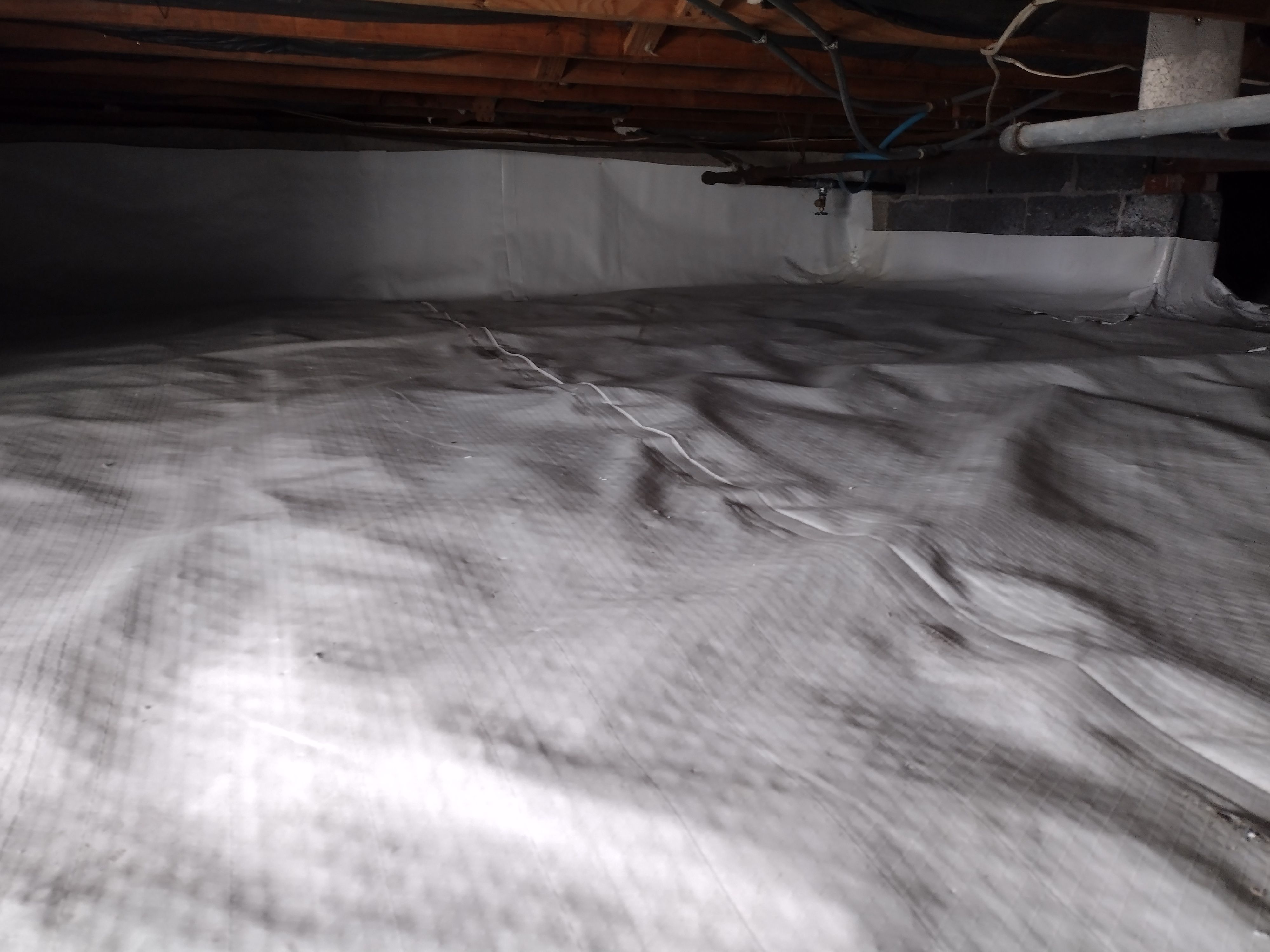
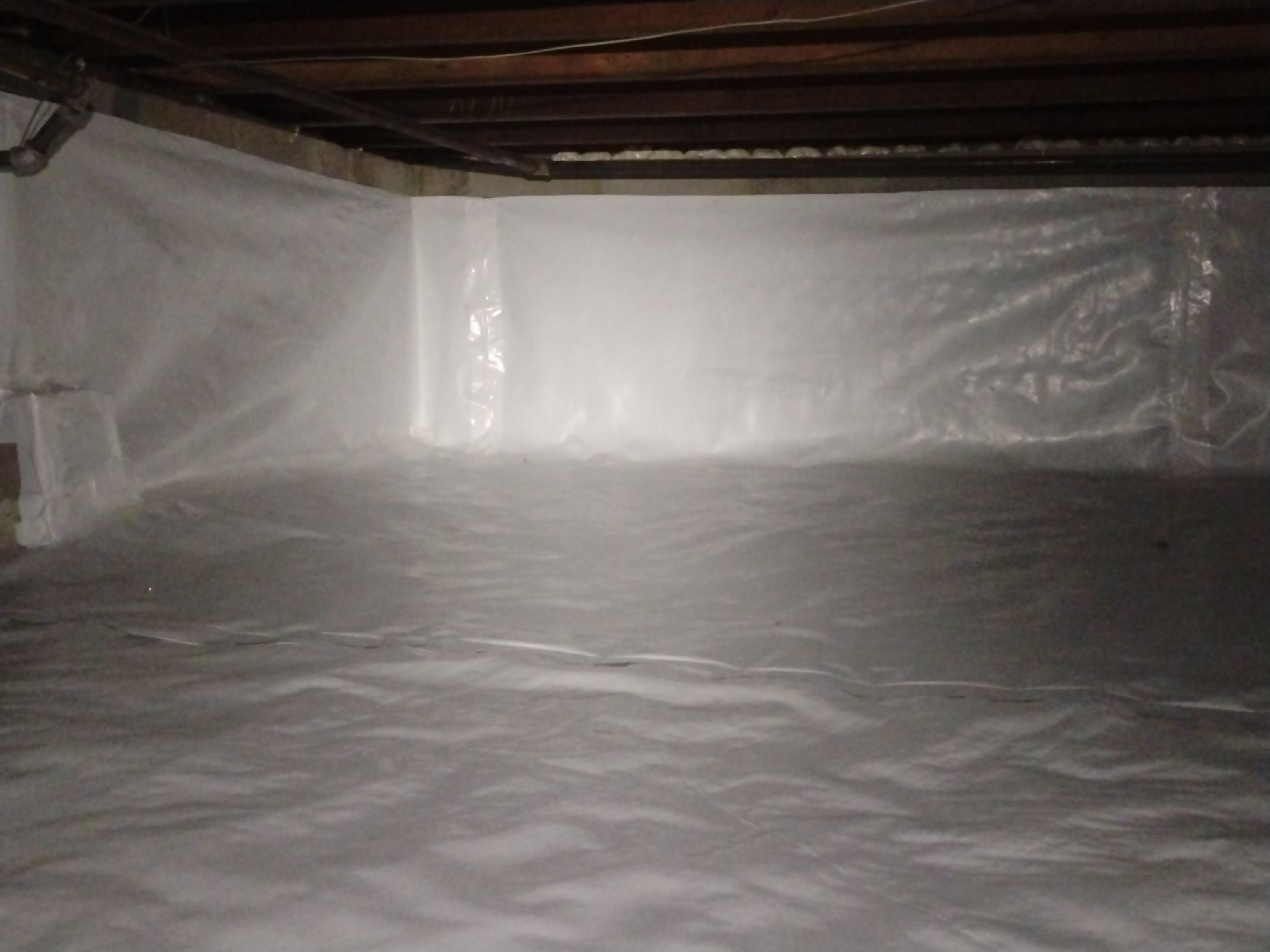
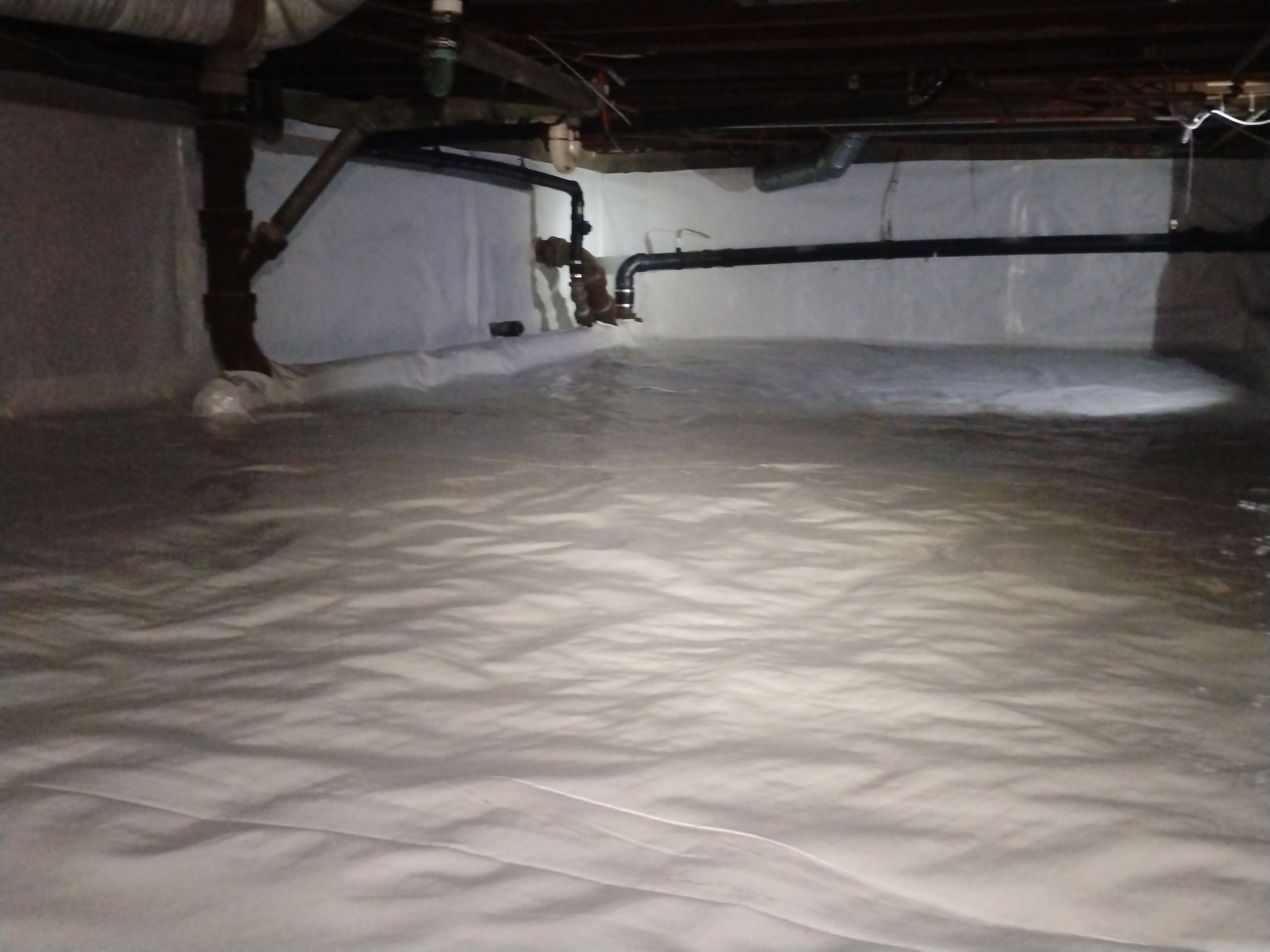
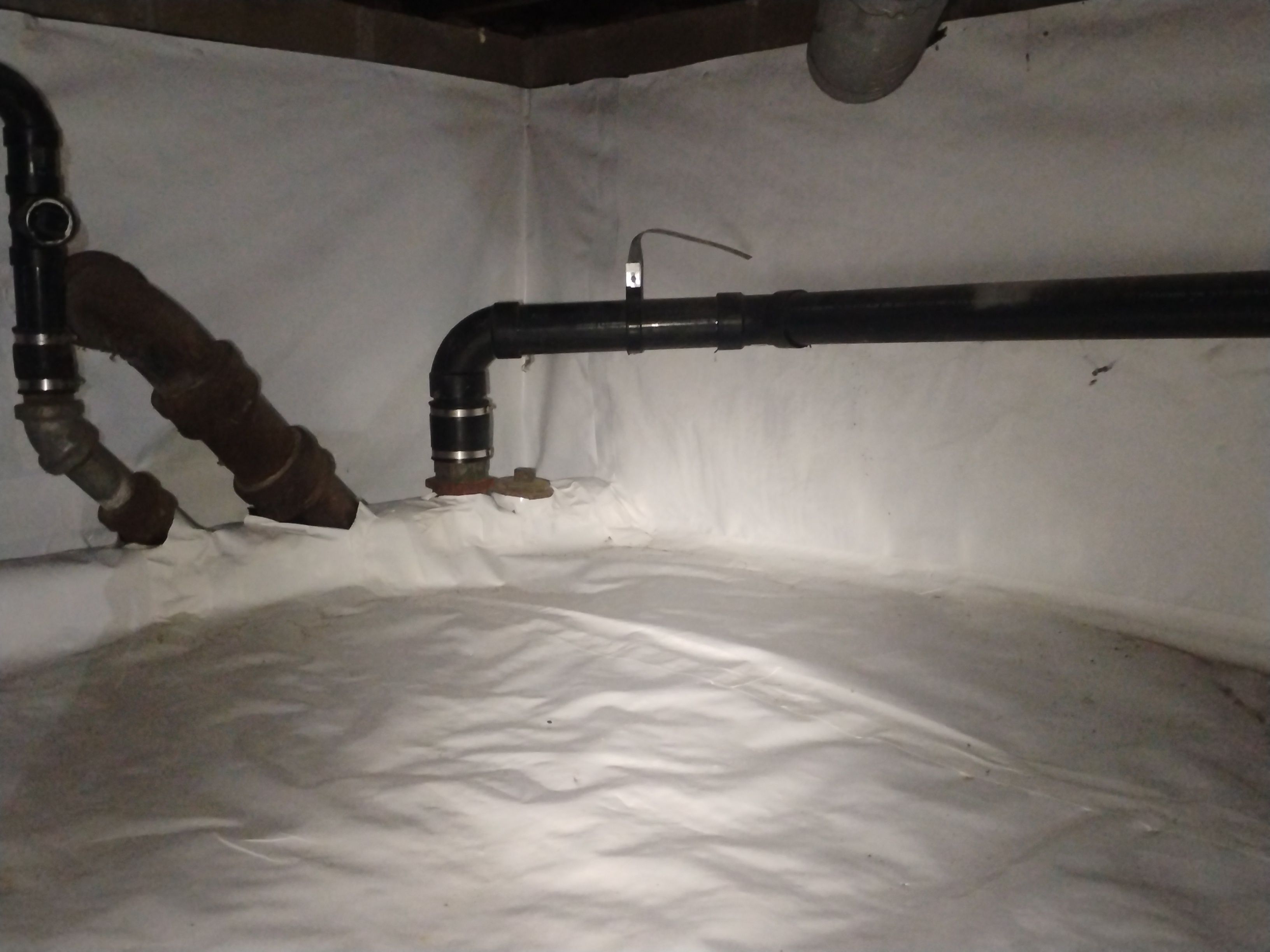
The unit does not dry a crawlspace on its own. It works with the vapor barrier, the encapsulation it is usually part of, the drainage that takes water out, and the doors and vents that keep outside air out. The vapor barrier comes first on any dirt or sand floor. Between 30 and 50 gallons of water vapor rise off exposed soil every day, and no unit should be asked to pull that much out of the air.
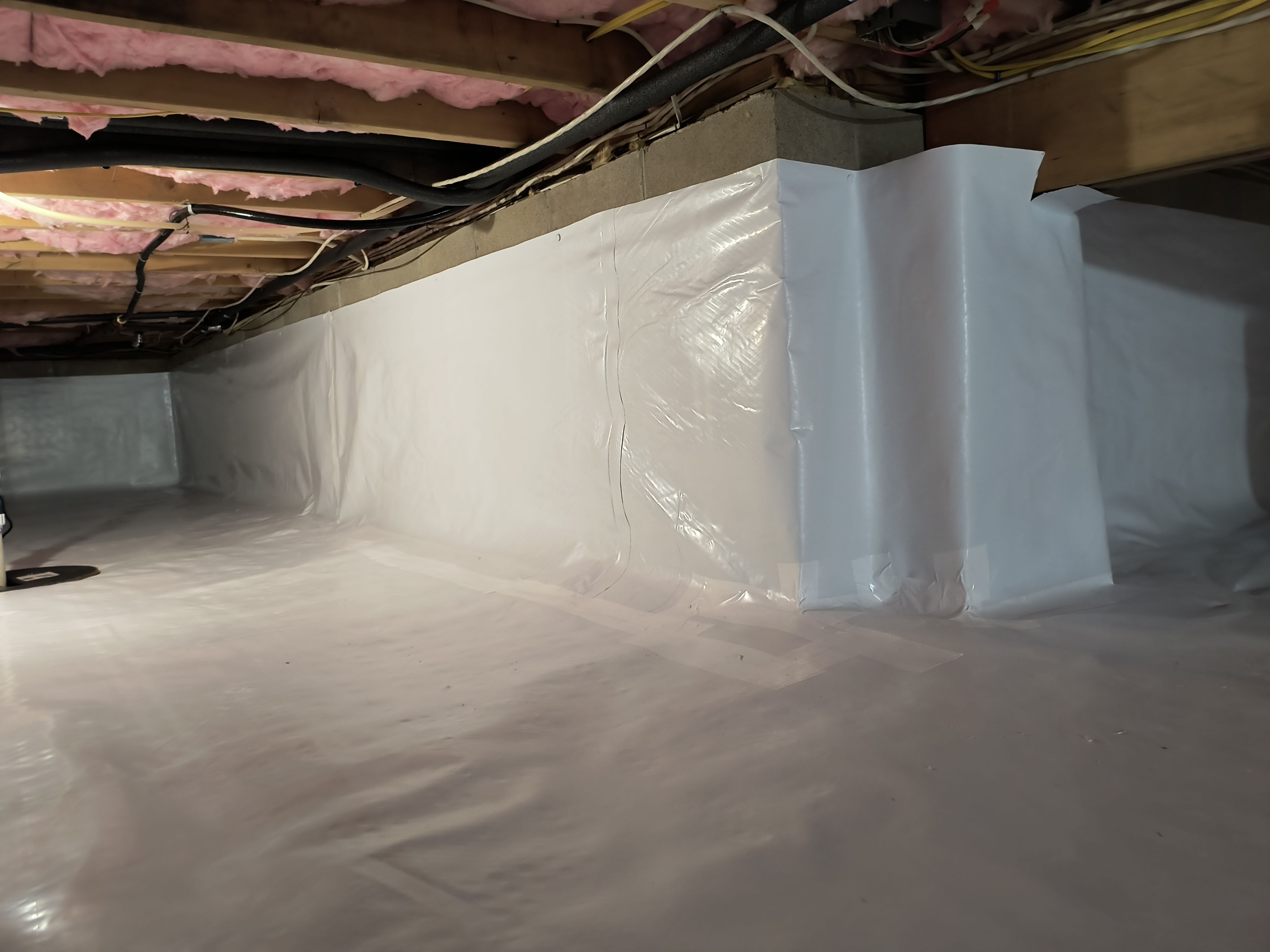
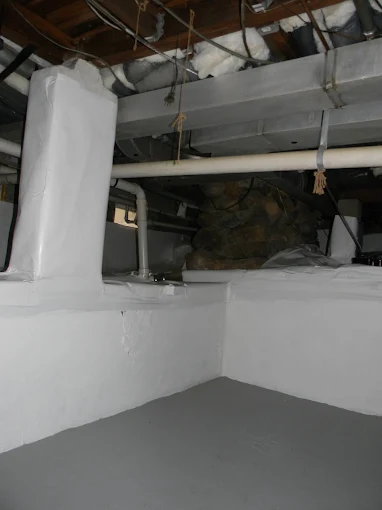
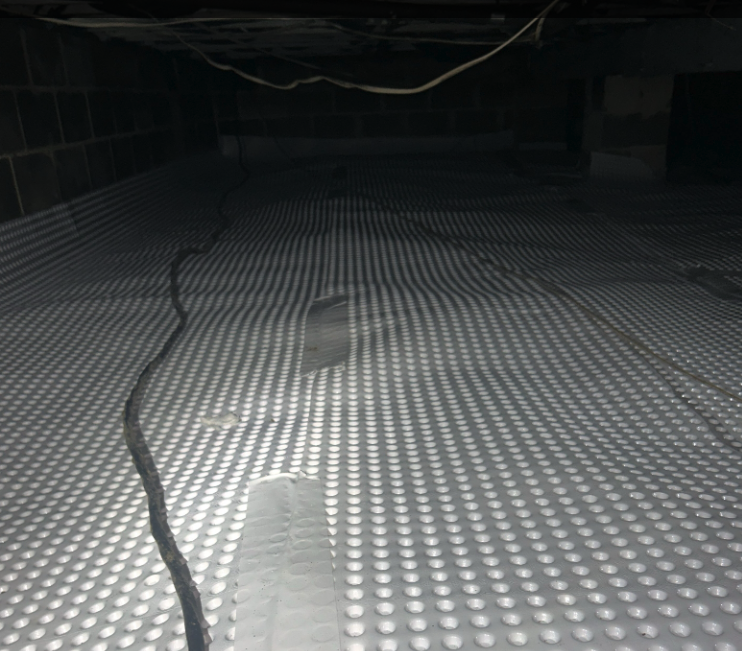
On an encapsulation job the vapor barrier and the dehumidifier go in together, after the clean-out, any treatment and the drainage work. Where water is coming in, interior French drains and a sump take it out before the unit is hung, and the sump gives the condensate line somewhere to go.
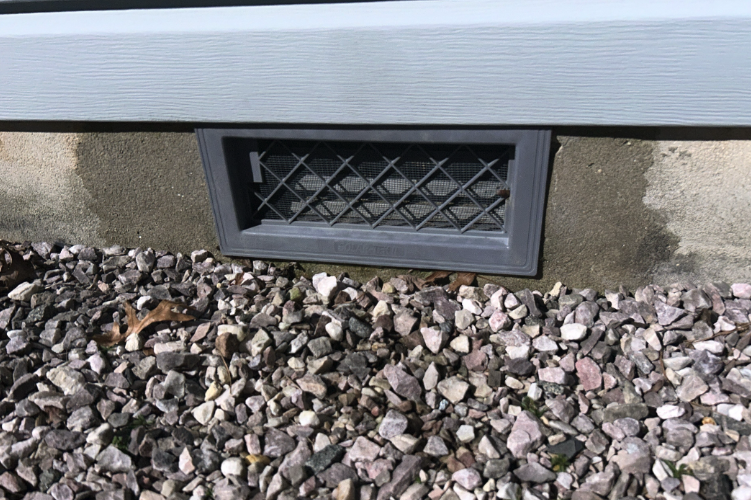
Your doors and vents decide whether the unit is drying the crawlspace or the yard. A sealed door and insulated Smart Vents keep outside air where it belongs. Have a basement instead? See basement dehumidifiers.
Before you buy one
Thinking of buying a dehumidifier yourself?
Before the box-store unit goes in the cart, get the readings. Set that unit on the dirt with nothing under it and a bucket to empty, and it will run all day while the bucket fills, because the soil keeps sending vapor up faster than a small unit takes it down. A fan does less than that. It pushes the humid air from one end of the crawlspace to the other and takes nothing out. If the readings are still high once the barrier and the drainage are in, the unit that goes in needs to be sized, hung and drained for the space. A Crawlspace Evaluation gets you the readings and the recommendation in writing, usually within 24 hours.
Keeping it running
What keeps a crawlspace dehumidifier running?
A clean filter is most of it. On the Annual Evaluation Program the crew is under the house three times a year, logging the humidity reading and testing the condensate pump, and filter cleaning or replacement can be added to those visits as a paid add-on. Santa Fe Compact units are serviced on the same schedule. The program also extends the applicable warranties on the rest of the crawlspace work, which is a second reason to keep it going.
Who does the work
Who installs the dehumidifier, and what do you get on paper?
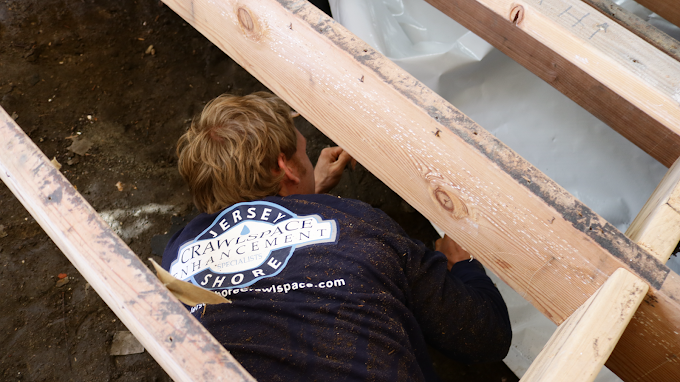
The crew under your house is ours. Jersey Shore Crawlspace Enhancement has worked in 13 New Jersey counties since 2010, under NJ Home Improvement Contractor license 13VH06460100 and NJ DEP 90211B, from an office in Farmingdale. The dehumidifier recommendation starts with the Crawlspace Evaluation. A written report with photographs and the humidity and wood moisture readings follows, usually within 24 hours, with the unit named if one is called for.
Frequently asked questions
Is it worth putting a dehumidifier in a crawl space?
Yes, once the water source is handled and the readings are still high. Above 55 percent relative humidity the air keeps feeding Mold-Like Substance on the framing, and a unit sized and drained for the space is what keeps the number down. The Crawlspace Evaluation shows whether your readings call for one.
Can I just buy a store dehumidifier for my crawl space?
You can, and it will usually run nonstop without bringing the reading down. The portable unit is not sized to your crawlspace, is not drained to a sump or pump and sits on the floor where the crew has to crawl past it. The unit we hang drains itself and is sized to the space from the evaluation readings.
Where does a crawl space dehumidifier go, and where does the water go?
A crawl space dehumidifier hangs from the floor joists, above the vapor barrier and out of your way. The water has two ways out. With a sump nearby, a 3/8-inch line carries it there by gravity. Without one, a small condensate pump under the unit sends it through a line that leaves the crawlspace. You never carry a bucket.
Which dehumidifiers does Jersey Shore Crawlspace install?
AprilAire E-series, four sizes from the E050 up to the E100, each available as a W model that reports to your phone. We are certified AprilAire installers and we service Santa Fe Compact units as well. Each dehumidifier carries its own manufacturer warranty, separate from the 10-year warranty on vapor barrier, French drains, drainage matting, insulation and Mold Treatment.
What maintenance does a crawl space dehumidifier need?
The filter cleaned or replaced three times a year, and the condensate pump checked with it. Program visits log the humidity reading and test the pump, and filter service can be added to them as a paid add-on. Wi-Fi models let you check the reading and fault codes between visits.
Should a crawl space dehumidifier run all the time, and will a fan do instead?
No to both. A unit sized to a sealed crawlspace cycles off once the air is at or below 55 percent relative humidity, and one that runs without stopping is usually fighting an open water source or bare soil. Your fan only moves the damp air around the crawlspace without removing any of it.
Jersey Shore Crawlspace Enhancement, 1775 Route 34, Building D, Unit 14, Farmingdale, NJ 07727. Call 888-499-6847 or email Sales@JerseyShoreCrawlspace.com to schedule a Crawlspace Evaluation. NJ HIC 13VH06460100 and NJ DEP 90211B.
What our clients say









Ready to protect your home?
Other Jersey Shore Crawlspace Services