Basement Evaluation in New Jersey
Is your basement damp?
What we look at
What does a basement evaluation look at?
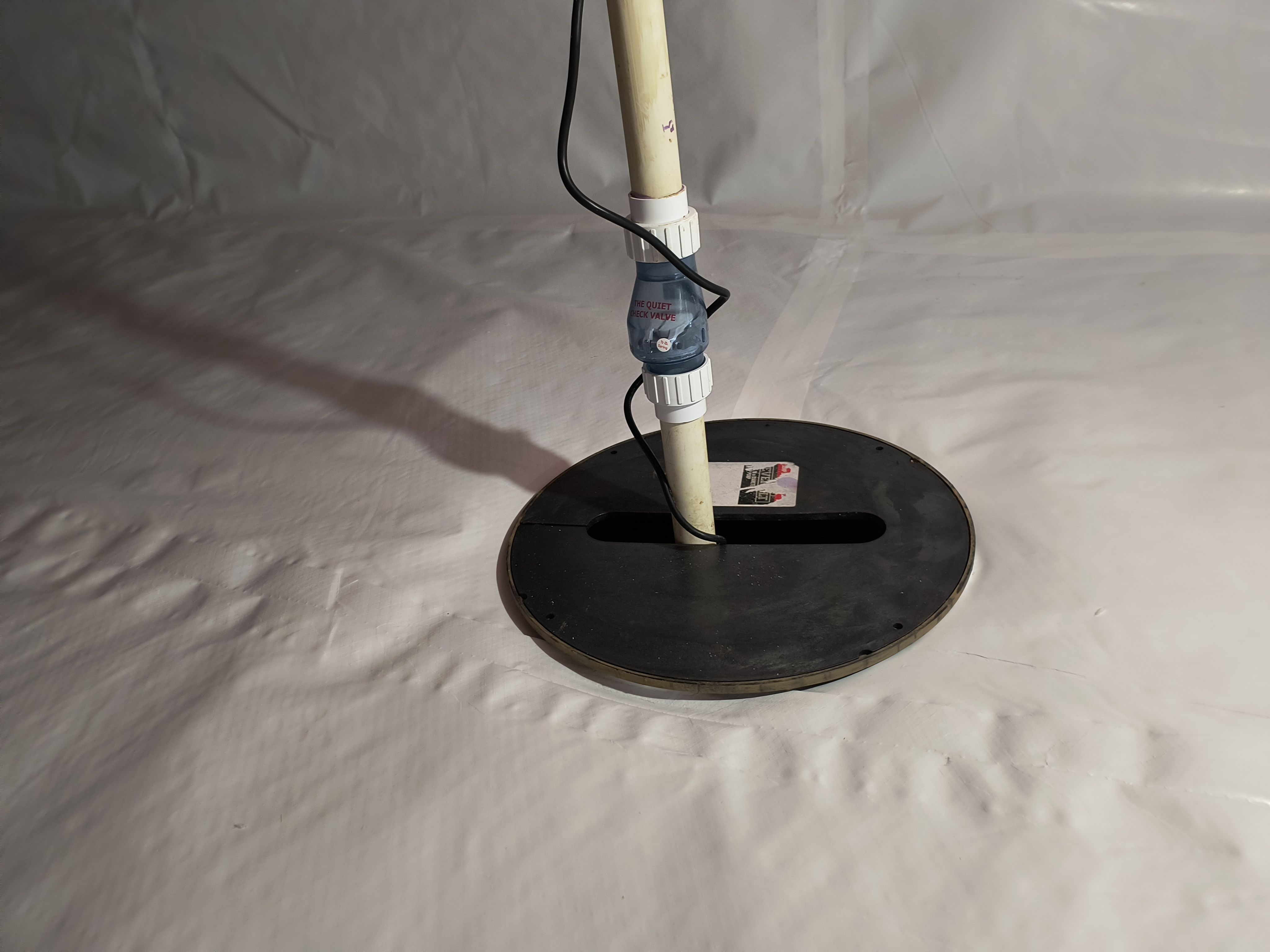
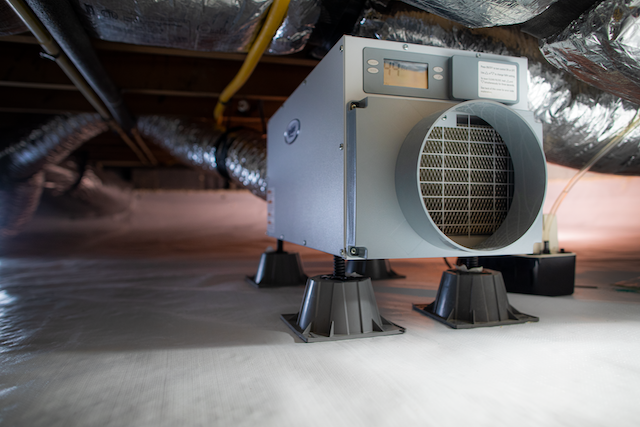
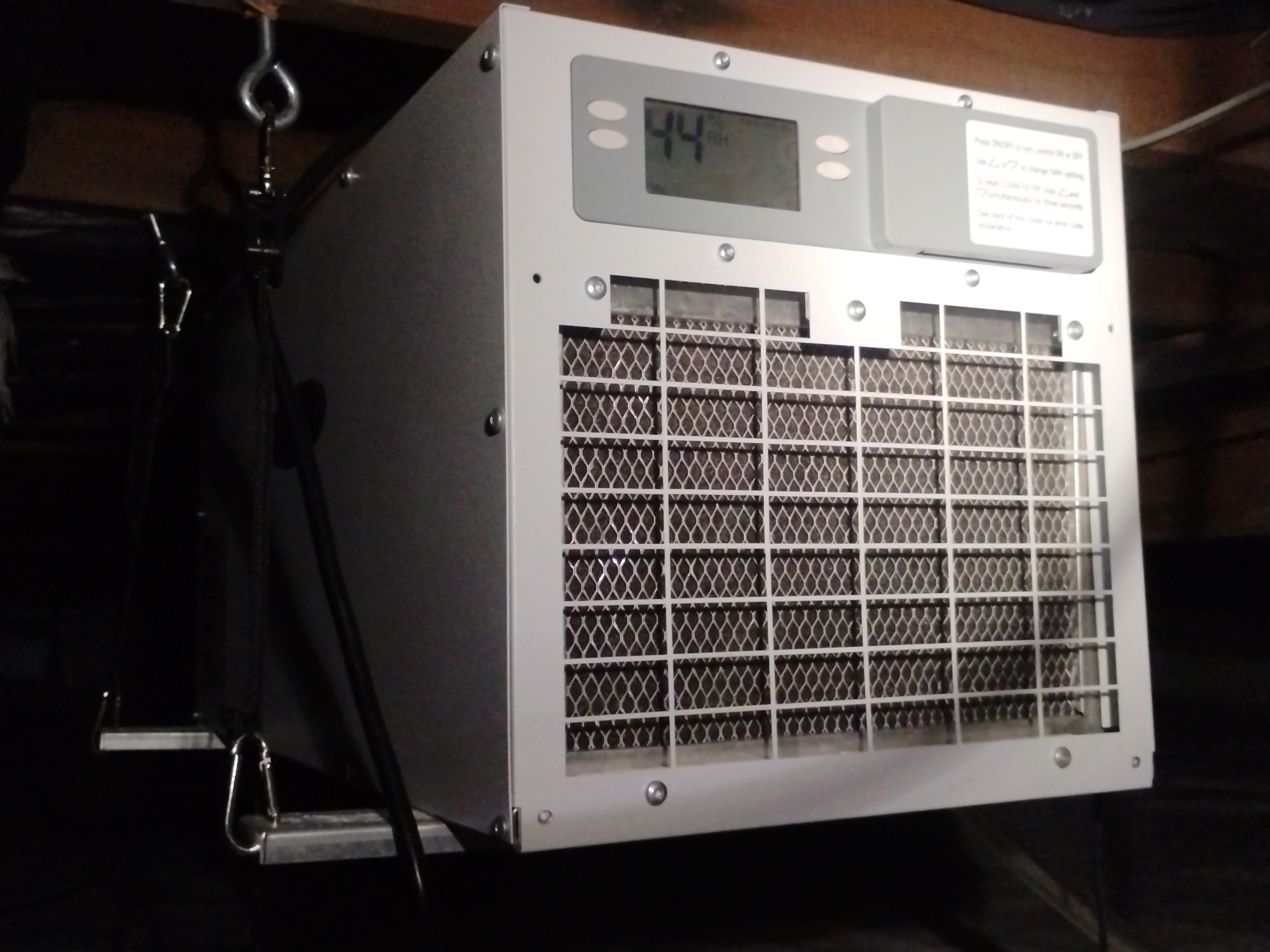
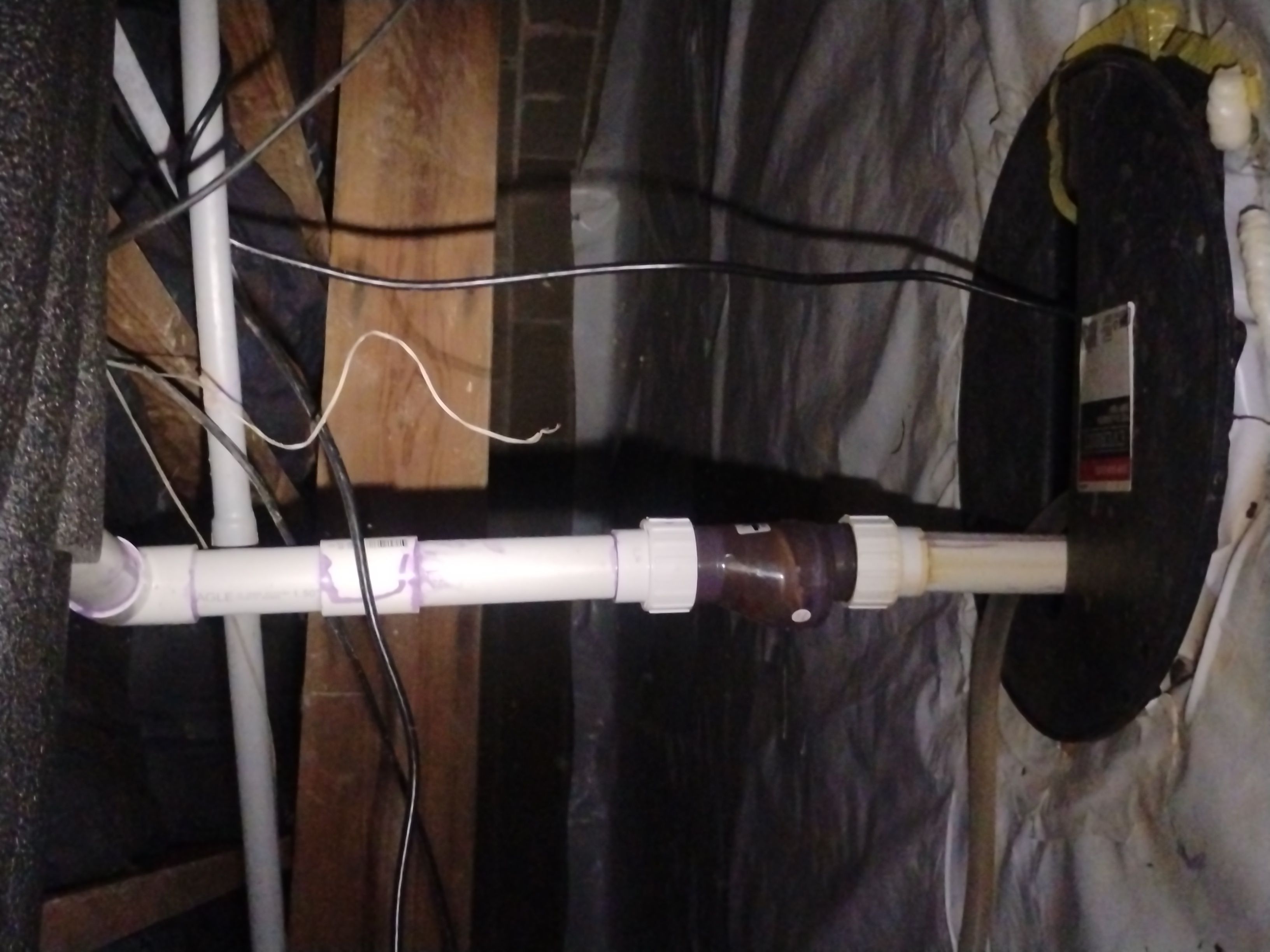
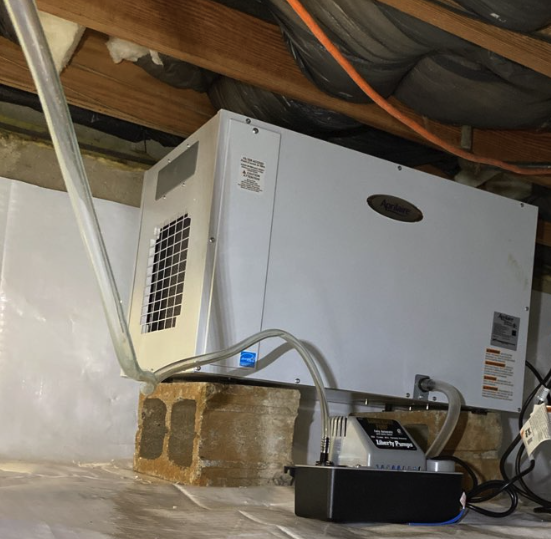
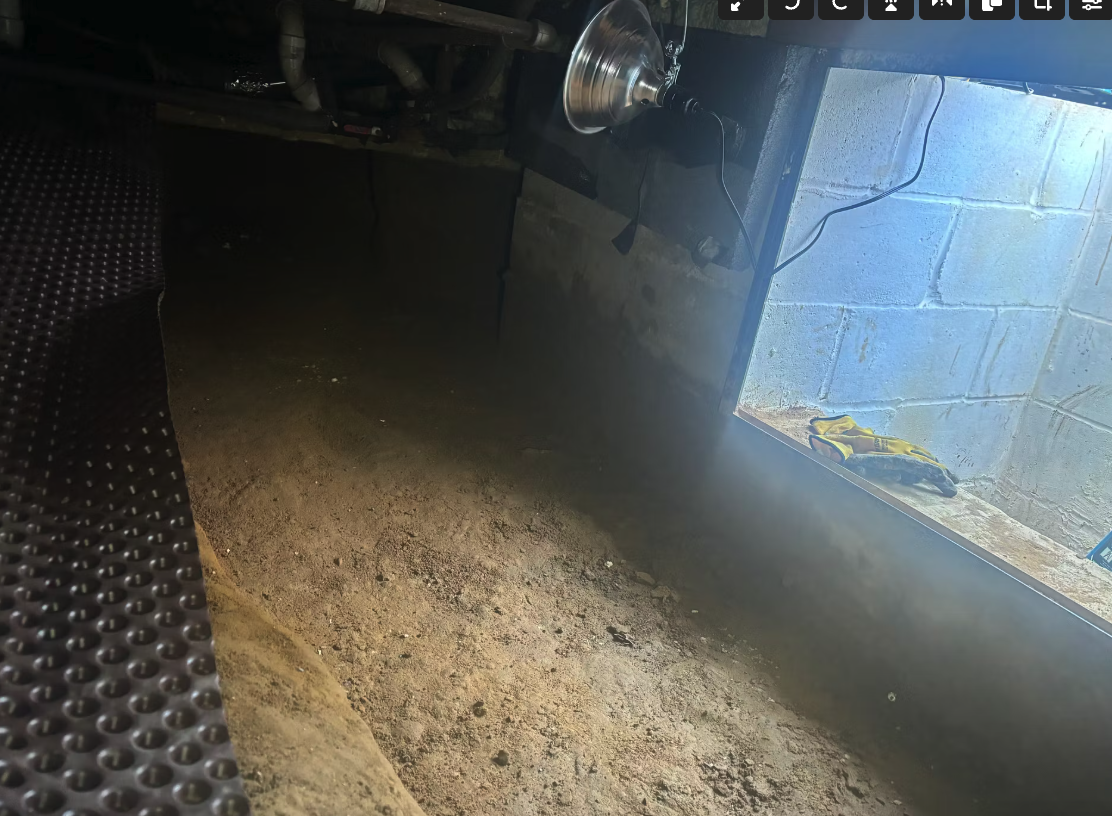
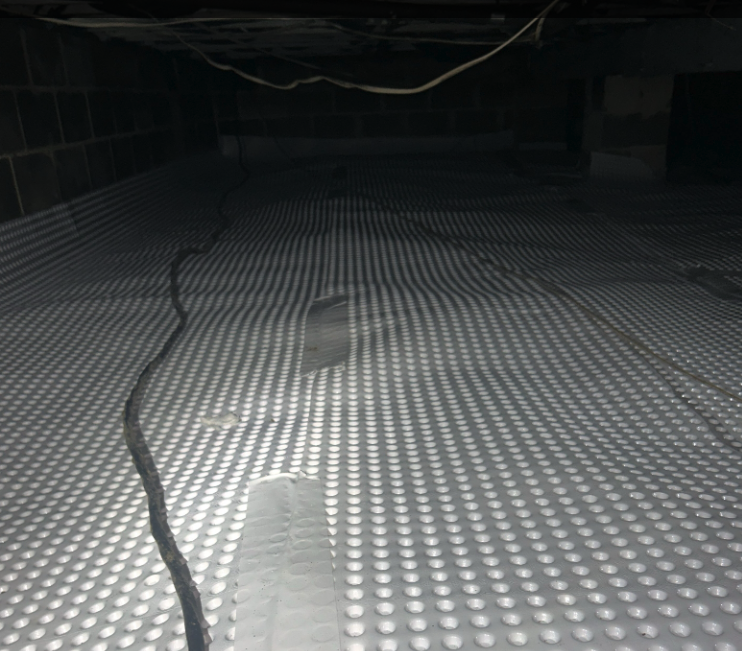
Every wall, from the floor up, for water marks, the white mineral crust that water leaves behind on block and poured concrete, cracks and the spots where it comes through in a storm. The floor and the slab for where water has stood. The sump, if there is one: whether the pump runs, whether the discharge is tight and where it goes, whether there is a check valve and a lid. Any French drain or drainage matting that was put in before us, and whether it still carries water to the basin. The dehumidifier you already own, whether it is one of ours or one from the store, and what it is set to.
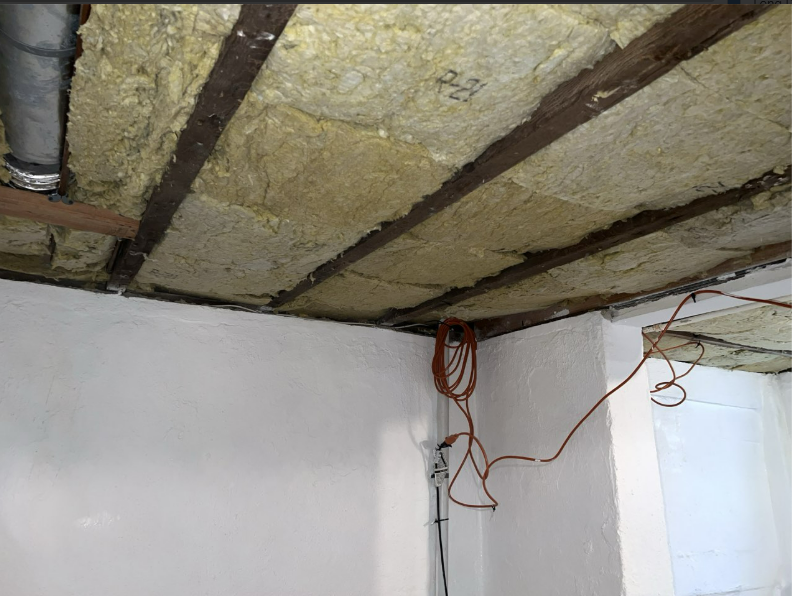
Then the air and the wood. Relative humidity and dew point at several points, not one, because the corner behind the water heater reads differently from the middle of the room. Wood moisture on the joists overhead and on any framing in a finished basement. Mold-Like Substance on the framing, the back of finished walls where we can reach it and the underside of the stairs. In a finished basement we note what sits behind the drywall from what we can see at the utility room, the sump closet and the ceiling. And one practical thing: whether there is an outlet where a dehumidifier would go.
When to book one
When should you have a basement evaluated?
When something has changed. The usual calls sound like these.
- The basement smells musty after a French drain and sump went in and you expected that to end it
- Water on the floor or a wet wall after a storm, once or every time
- A chalky white crust or peeling paint on a block wall
- A sump that runs on dry days, or one you have never heard run
- A finished basement that smells but shows nothing
- You are buying or selling a house with a basement and the inspection report has a line you want measured, not guessed at
For buyers and sellers the report doubles as the document the other side's attorney asks for. Our pages for home buyers and home sellers say how we handle the timeline.
What you get
What do you get on paper?
A written report, usually within 24 hours. It carries a photograph of each finding, the humidity and wood moisture readings with where each one was taken, and the condition of the sump, drains and any dehumidifier as we found them. Findings are written as observed, not as a sales pitch, and left and right are called from the street so you and the crew mean the same wall. If work is called for, a scoped proposal comes with it. If none is called for, the report says that too, and you have a baseline for next year.
Two basements we evaluated
What does the evaluation turn up?
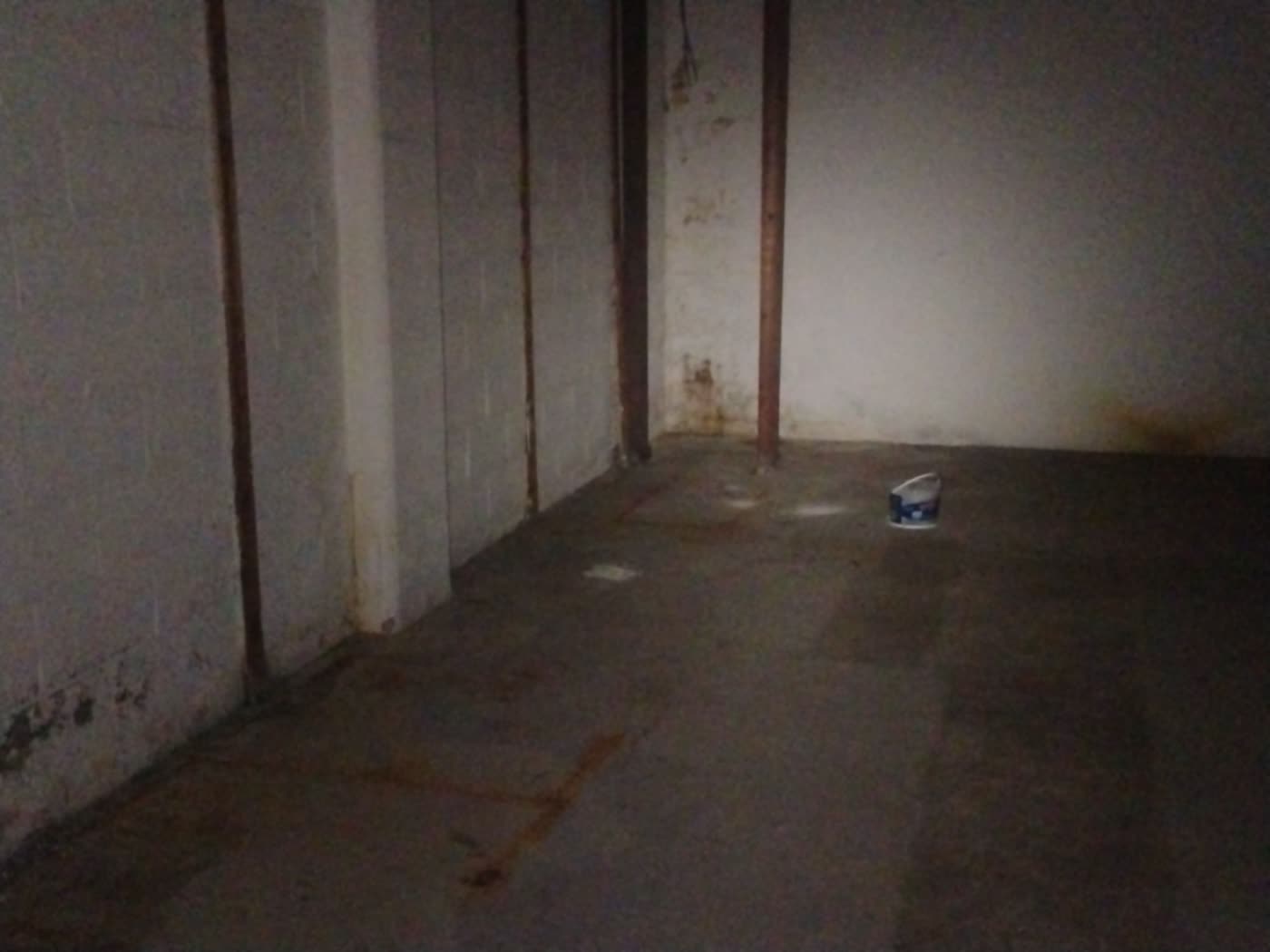
Sometimes the walls tell the story. Here is what our evaluator found and photographed in a Chester basement:
- Yellow mineral deposits around the block walls, the mark water leaves when it has been coming through
- A door at grade on the front left, where water from outside can reach the wall
- The only sump at the back right, across the basement from that door
- The air at 41 percent and the wood dry, so the trouble was water through the walls rather than damp air
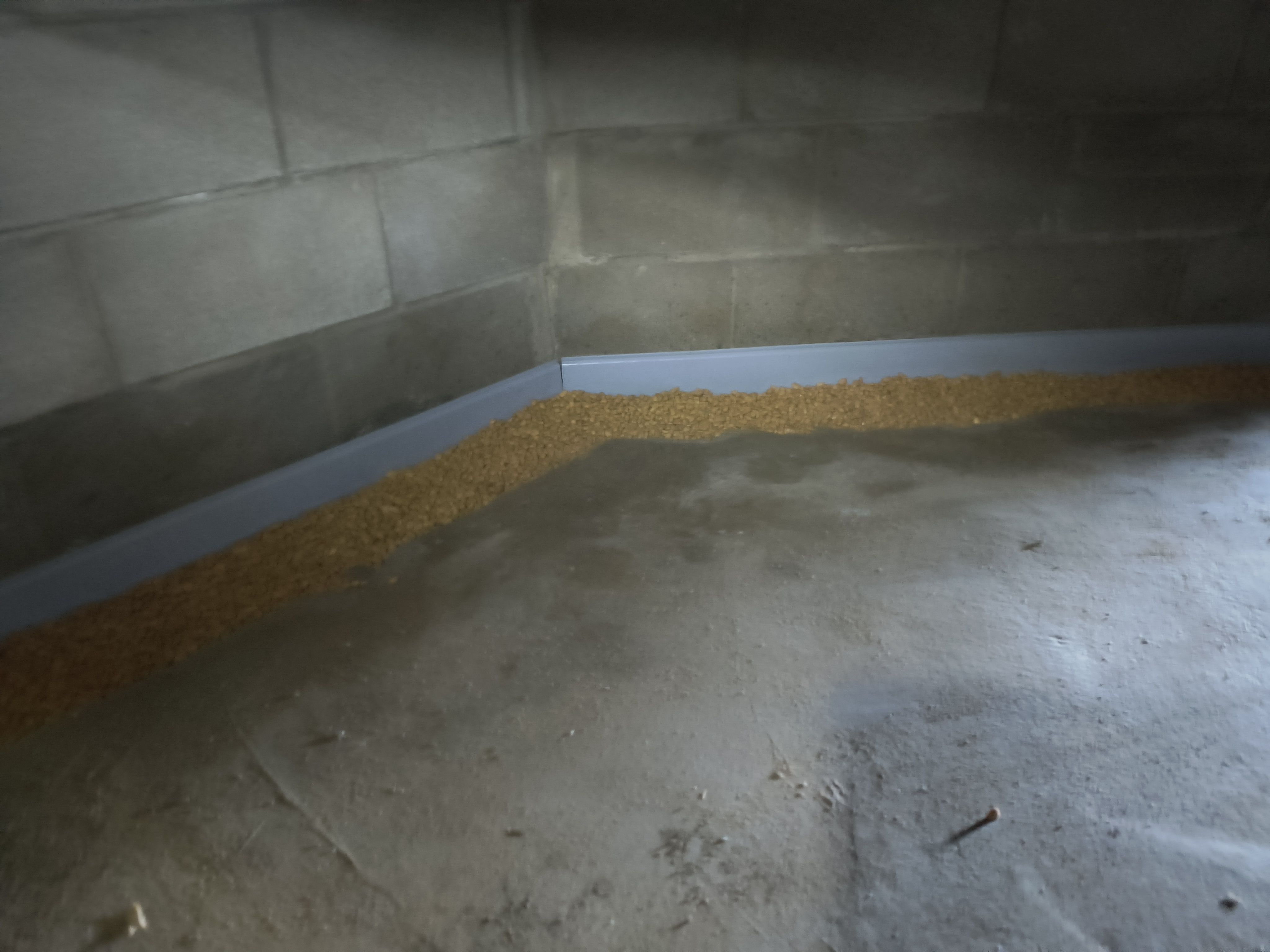
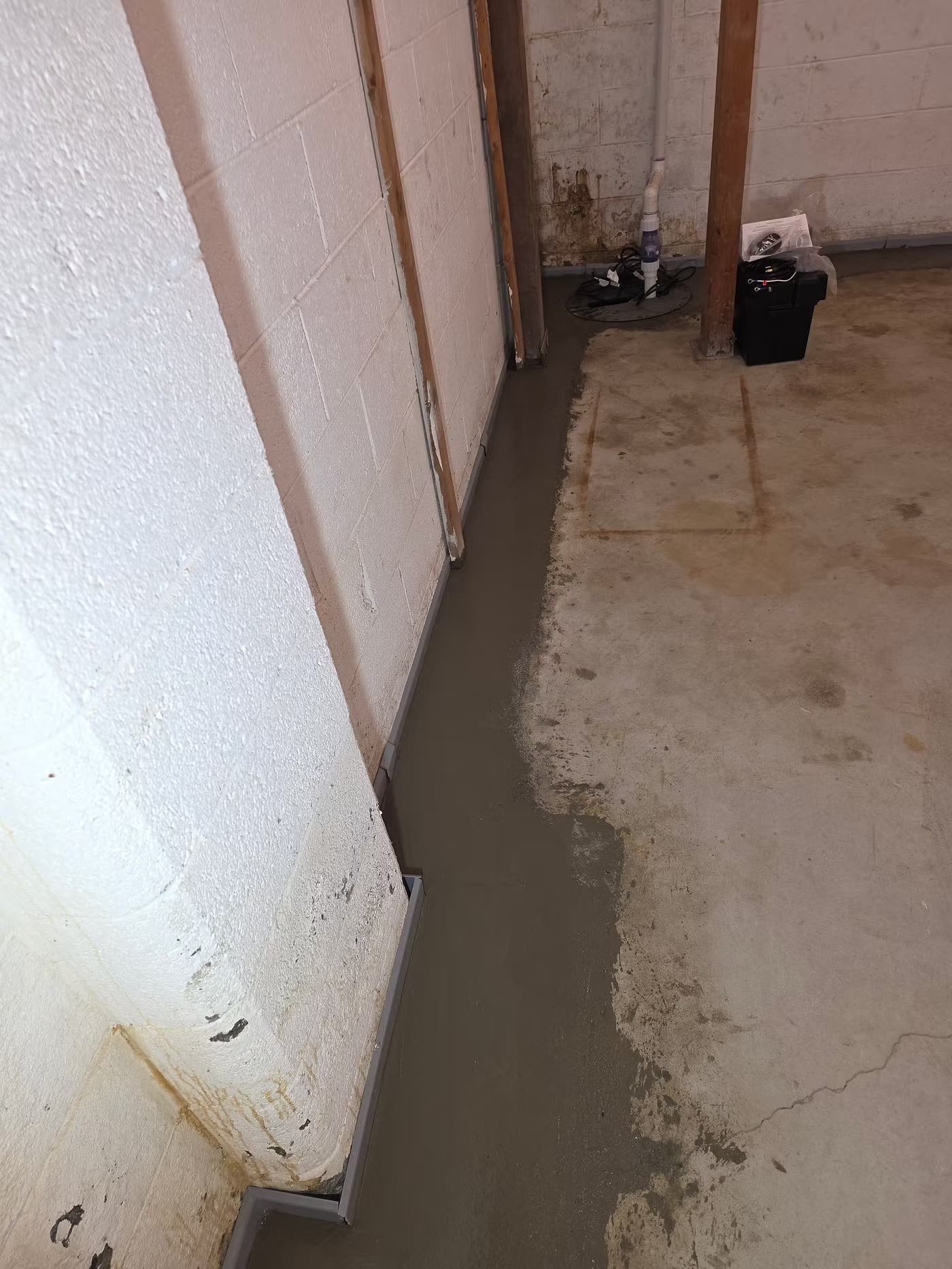
Each of those went into the written report with its photograph, and the report recommended an interior French drain on the concrete floor, a catch basin in the exterior door well and a new sump pump system to take what the drain collects. The crew photographed the finished drain as well, so the owner has the before and the after side by side.
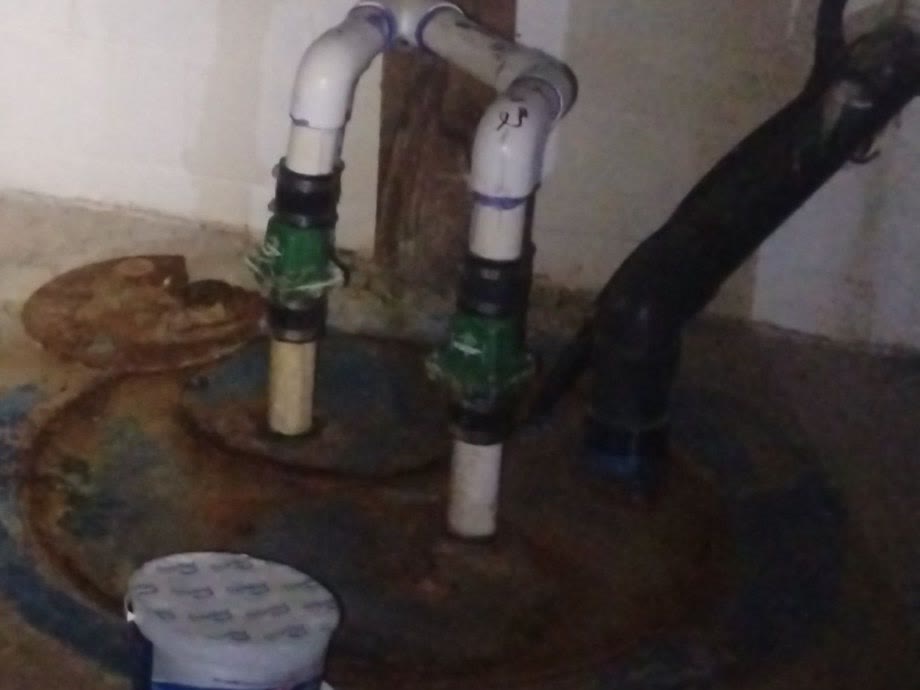
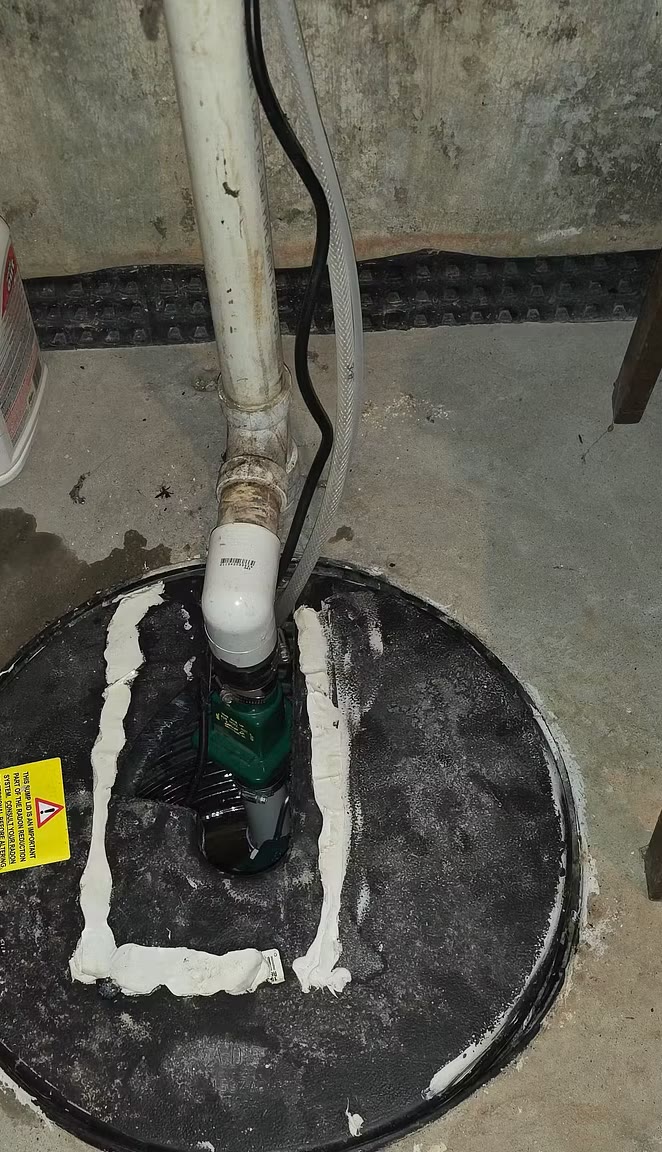
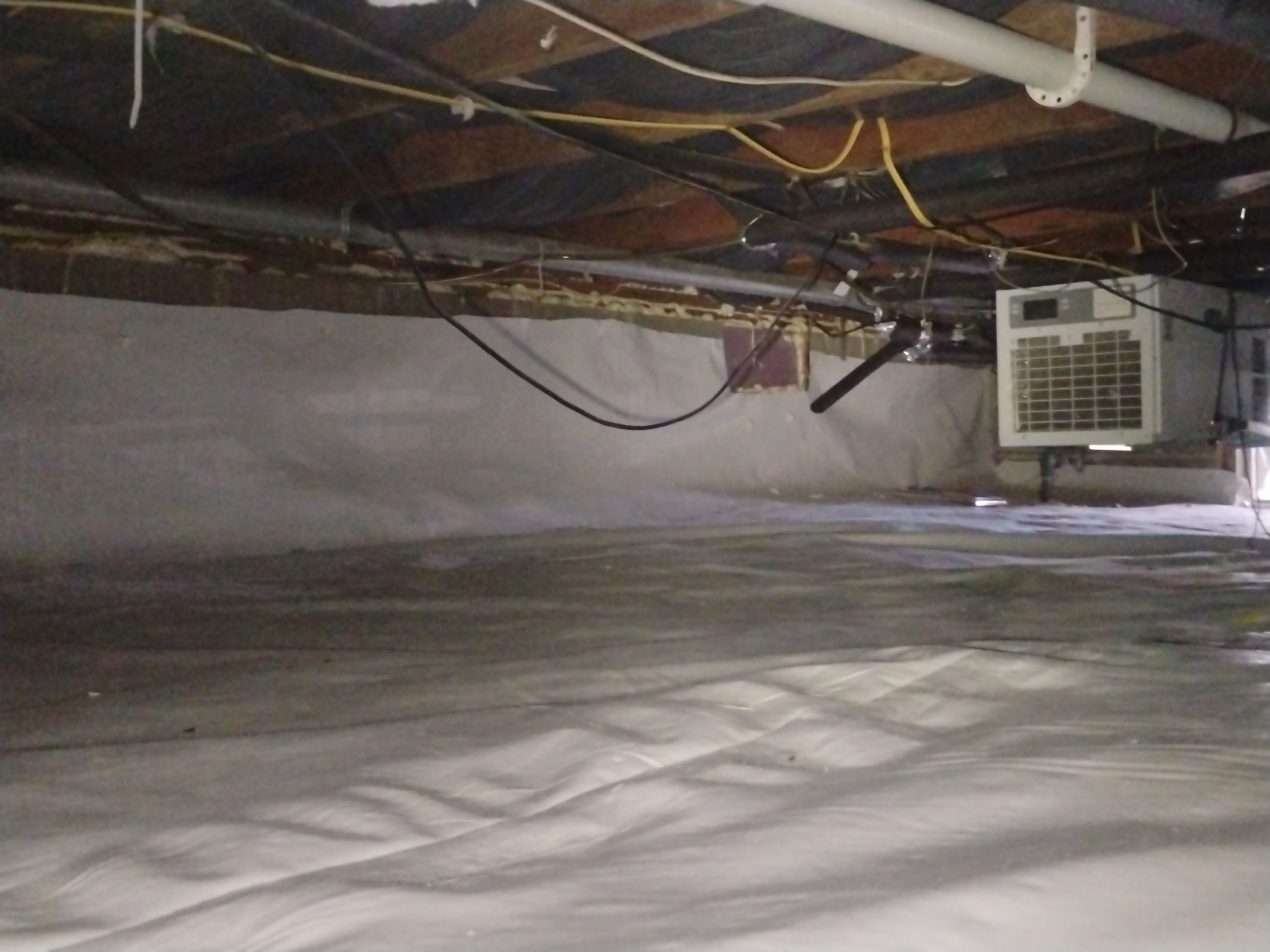
Sometimes the answer is the sump. The Holmdel basement on our basement dehumidifier page had been evaluated before: water through one wall in heavy rain, a sump that ran, a dehumidifier in place. Then the owner noticed the sump running on a dry day, lifted the lid and found the discharge pipe had come apart inside the basin. The pump had spent about two months sending the same water up and back down. Our next visit put that in writing, and the job became a new pump and a new dehumidifier.
After the evaluation
What happens after a basement evaluation?
Usually one thing, sometimes two, rarely all of it. If water is coming through the walls or up through the floor, the report will talk about drainage first, interior French drains to a sump, as in Chester, or drainage outside the foundation where the water is arriving from the yard. If the air stays damp once the water is handled, it will talk about a basement dehumidifier. Where there is Mold-Like Substance on the framing, a Mold Treatment comes before anything gets covered up. Cold floors and a damp rim joist point to basement insulation. The order matters as much as the list, and the report gives you both.
Basement, crawlspace or both
What if the house has a crawlspace too?
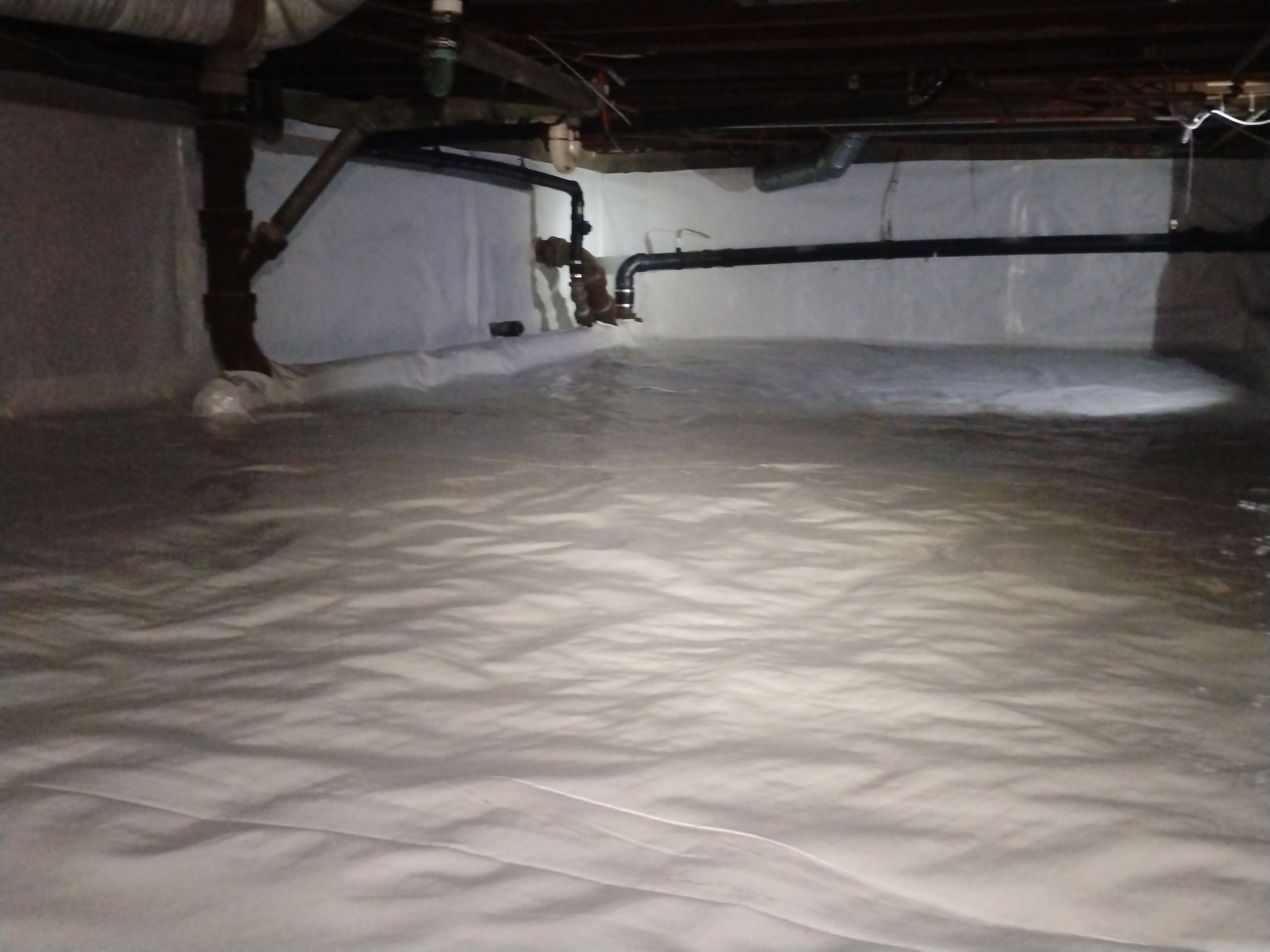
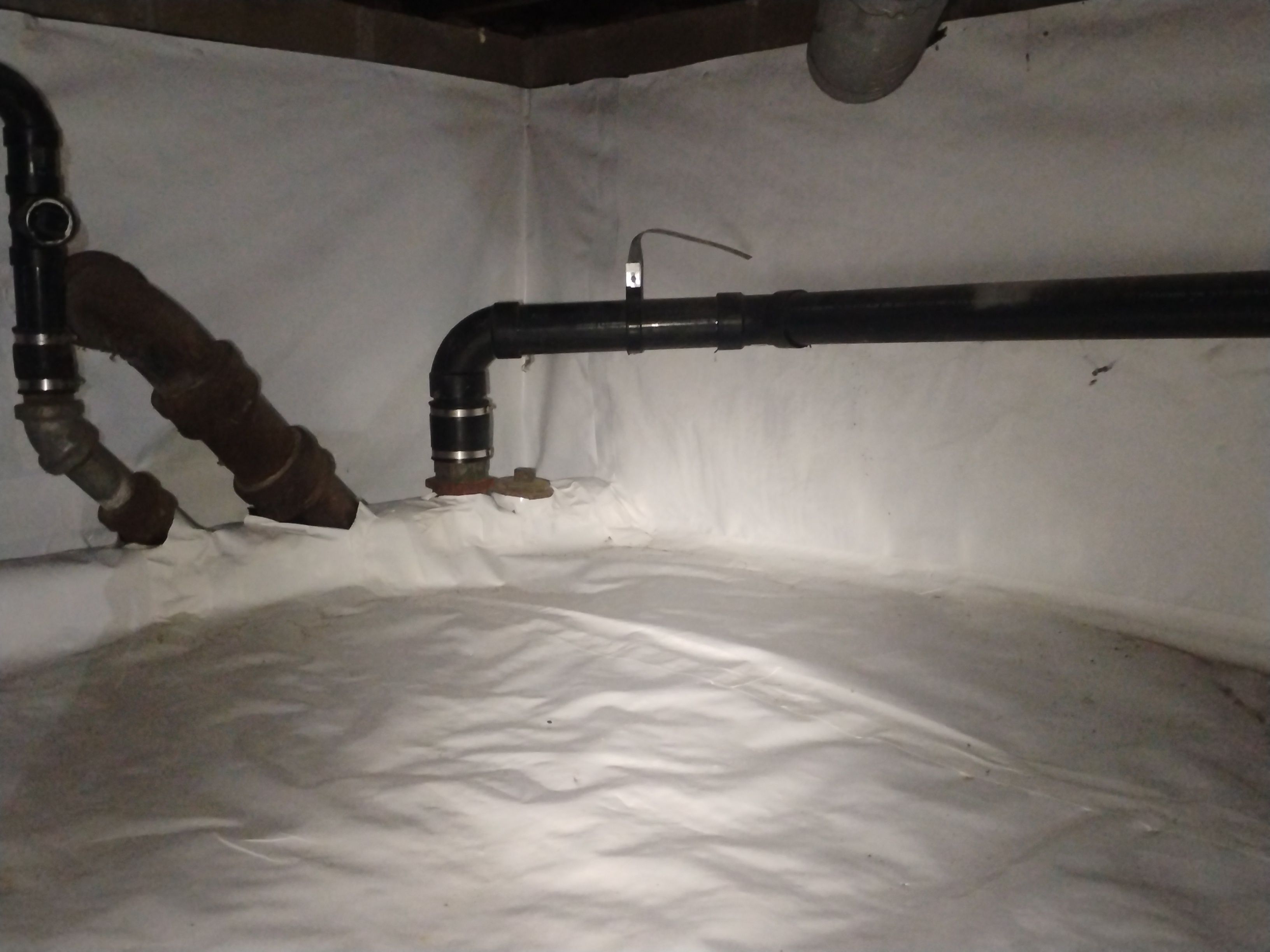
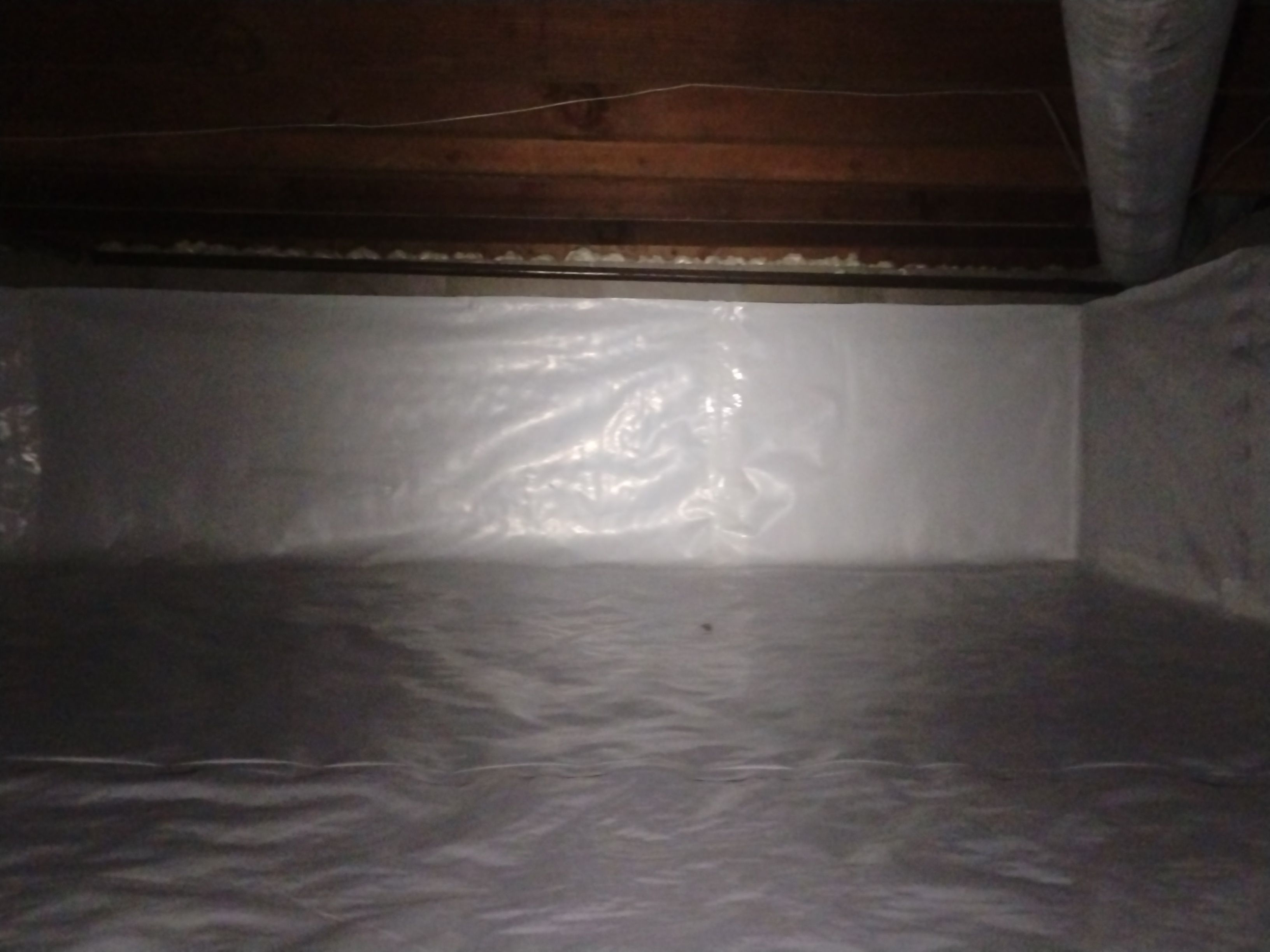
Plenty of shore houses have both, a basement under the main house and a crawlspace under the addition. One evaluator covers both on the same visit and you get one report; say so when you book, or ask while the evaluator is there. If your house has a crawlspace and no basement, the Crawlspace Evaluation is the page you want. Attic instead? See the Attic Evaluation.
Keeping it checked
Does the evaluation happen once?
Once if you want it once. Homes on the Annual Evaluation Program get three visits a year, and in a basement that means the sump gets tested, the readings get logged against last time and the walls get looked at again before the wet season. Dehumidifier filter cleaning or replacement can be added to those visits as a paid add-on. The program also extends the applicable warranties on the basement work we did.
Who does the work
Who performs the Basement Evaluation?
Our own field evaluators, not a salesperson with a clipboard. They work for Jersey Shore Crawlspace Enhancement, which has worked out of Farmingdale since 2010 across 13 New Jersey counties. The licenses behind the report are NJ Home Improvement Contractor 13VH06460100 and NJ DEP 90211B. We do the work the report calls for, so we have every reason to get the report right the first time.
Frequently asked questions
How long does a basement evaluation take?
Most take 30 minutes to an hour on site, longer for a large or finished basement where we have to work around what is behind the walls. The written report with photographs and readings usually reaches you within 24 hours. We can usually be at the house within a day of your call.
What does a basement inspection check for water?
Every wall for water marks, mineral crust, cracks and active seepage, the floor for standing water, the sump for whether the pump runs and where it discharges, and any drain or matting already in place. We also take humidity and wood moisture readings so a basement that looks dry but is not gets caught.
Do you evaluate finished basements?
Yes. We read the air and the wood where we can reach them, check the utility room, the sump closet and the ceiling for what sits behind the finish, and meter the walls where they are exposed. A finished basement that smells musty with nothing showing is exactly the case the readings are for.
Is a basement evaluation the same as a home inspection?
No, and the difference is what gets measured. A home inspector's report will usually note that the basement shows signs of moisture. Ours says how much and where, with a photograph of each spot and the sump tested, and it ends with what we would do about it and in what order.
How often should a basement be evaluated?
Once when something changes, and once a year after that if the basement has a history. Homes on the Annual Evaluation Program are seen three times a year, which catches a sump that has quit before the next storm finds it for you.
Does the evaluation cover the sump pump?
Yes, every time there is one. We lift the lid, run the pump, check the check valve and the discharge pipe, look at where the water goes outside and note whether there is a battery backup. A pump that runs on dry days or never runs at all is a finding that goes in the report.
Jersey Shore Crawlspace Enhancement, 1775 Route 34, Building D, Unit 14, Farmingdale, NJ 07727. Call 888-499-6847 or email Sales@JerseyShoreCrawlspace.com to schedule a Basement Evaluation. NJ HIC 13VH06460100 and NJ DEP 90211B.
What our clients say









Ready to protect your home?
Other Jersey Shore Crawlspace services