%201%20(2).webp)
Buying a House With a Crawlspace in New Jersey
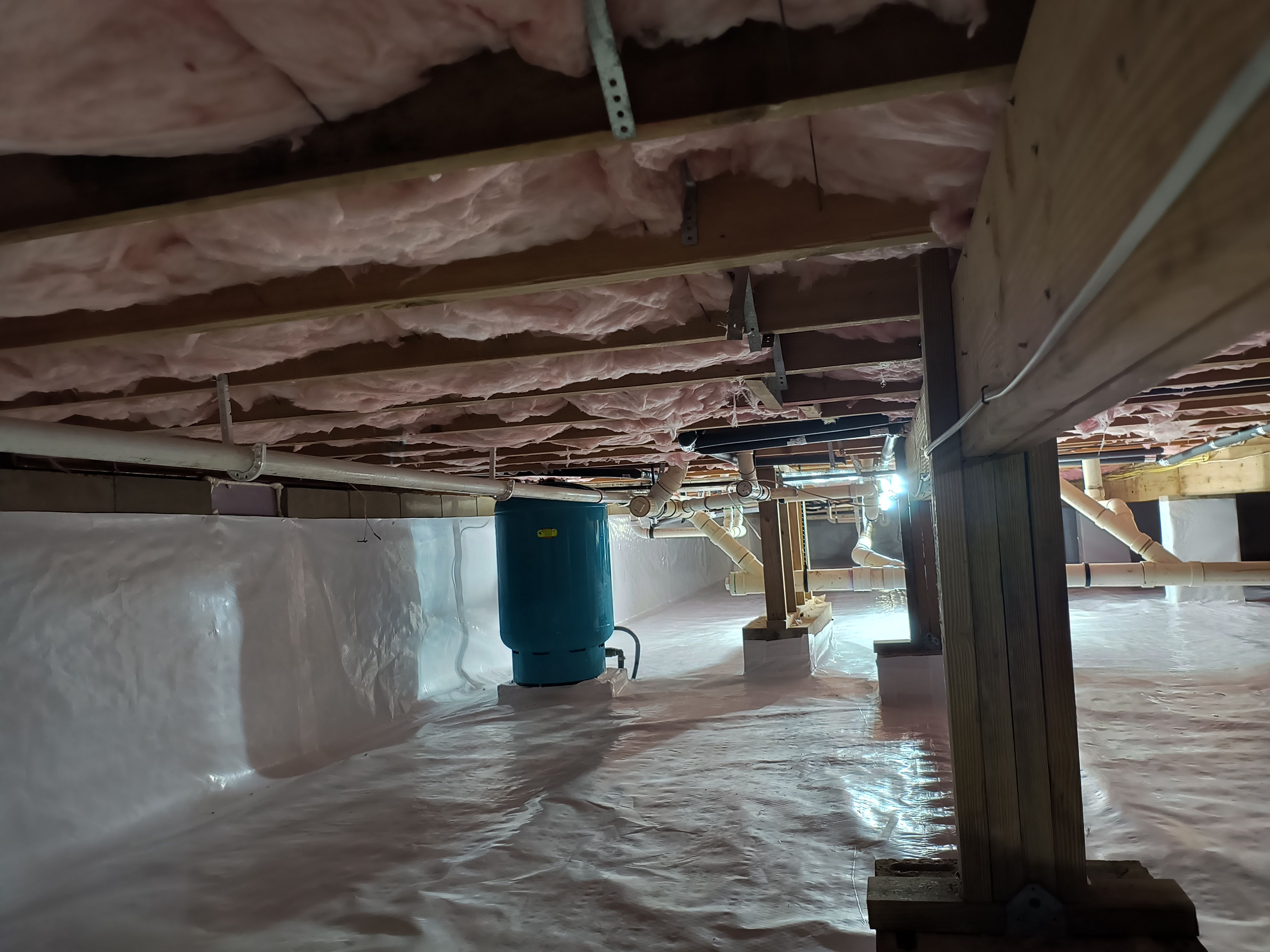
What can a home inspection see under the house and in the attic?
- Standing water on the vapor barrier. An inspector can only report it as "moisture observed", with no source, no reading and no proposal. Pumping it out is part of the clean out, the highest-volume work we do.
- Musty odor at the hatch and high humidity. The smell is the humidity talking. Without a hygrometer reading and a look at the vents and the vapor barrier, the inspection can only note the odor.
- Fallen insulation and Mold-Like Substance on framing. Kraft-faced batts hanging from the joists and dark staining on the subfloor are visible from the hatch. What caused them is under the vapor barrier or in the air, and that is what the evaluation goes after.
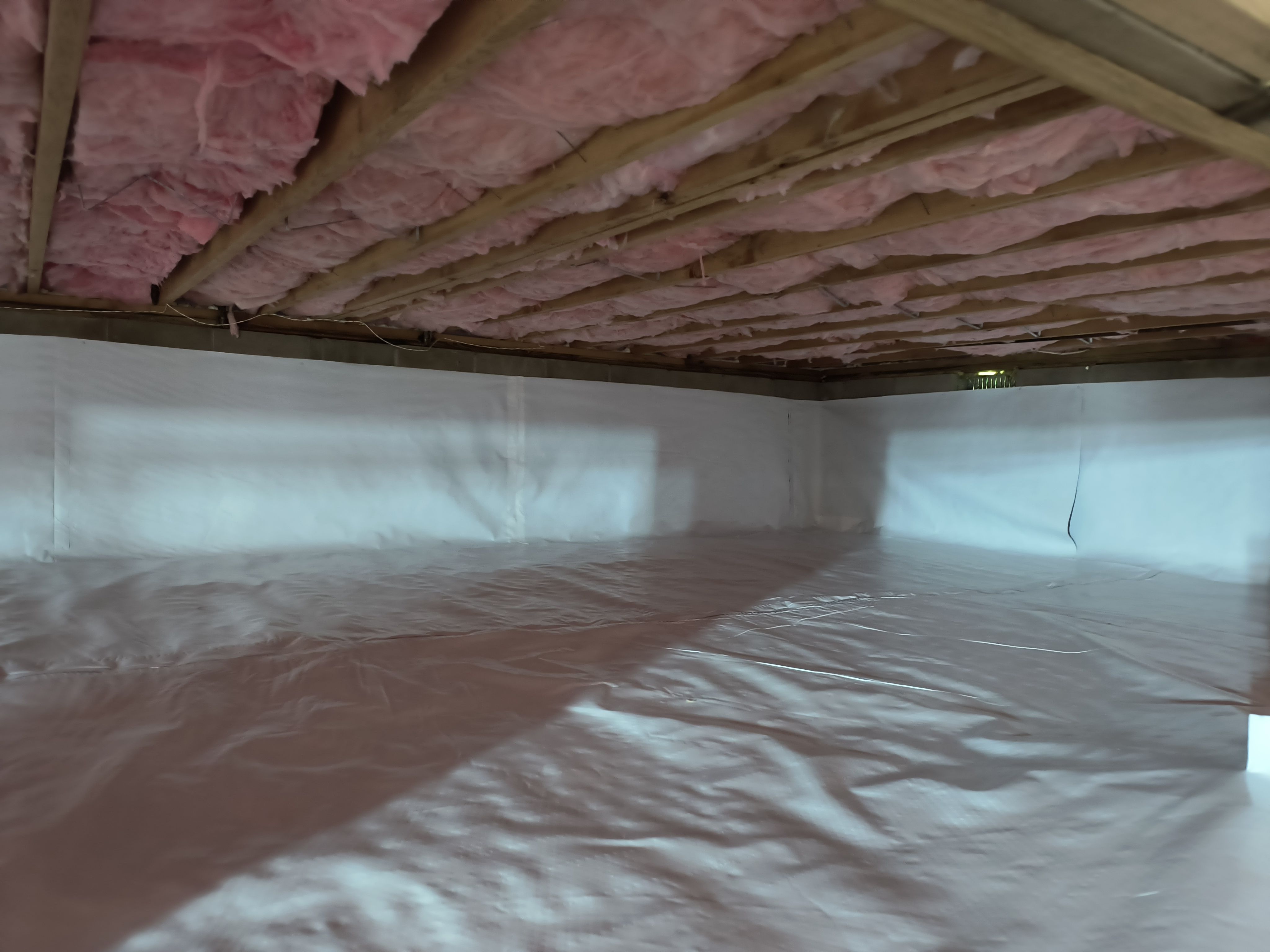
What does the Crawlspace Evaluation document that the inspection does not?
The Crawlspace Evaluation documents the readings, the photographs and the scope of work that the inspection report leaves out. Standing water gets a photograph and a reading on the framing above it. Growth is recorded as Mold-Like Substance present on the surface where it was found. Findings are written as the evaluator saw them, so the seller's agent has a condition to answer and no opinion to argue over. Left and right are anchored facing the home from the street. Both agents read about the same corner. A scoped proposal for any work we recommend closes the report, and when they apply, the basement, the attic and exterior drainage are in it too.
A typical case looks like this. A buyer is under contract on a raised ranch in Brick, and the inspection report says moisture observed in crawlspace, recommend further evaluation. Our evaluator goes under the house and finds standing water across the rear half of the space on a torn 6-mil vapor barrier, elevated moisture readings in the floor joists above it, and Mold-Like Substance present on the subfloor at the left rear corner when facing the home from the street. The report carries the photographs and the readings, and the proposal covers a clean out, a 20-mil string-reinforced vapor barrier and a dehumidifier sized for the space, with Mold Treatment on the affected framing. The buyer's agent attaches the report to the repair request. The seller now has a documented condition and a written scope to respond to.
- Moisture readings on the framing. Numbers your agent can put in a repair request, and a baseline to compare against after the work is done.
- Photographs of each finding. The seller's side sees the same water, the same vapor barrier and the same corner you do.
- A scoped proposal. What we recommend and what it includes, tied to the findings, written so a seller can act on it or offer a credit against it.

How do buyers use the report inside the inspection period?
.svg)
Request the repairs
Ask for a credit instead
Walk away with the facts
Prefer a home with a transferable warranty
Contact us to schedule your evaluation today!
.svg)
.svg)
.svg)
FAQ
Who pays for the Crawlspace Evaluation?
The buyer pays, in most cases. You order the Crawlspace Evaluation during the inspection period and the report is yours. If the seller had a pre-listing evaluation done, ask for that report, but it is their document, so consider your own if the findings matter.
How fast can you get under the house?
We can usually be under the house within a day of your call, and the written report follows within 24 hours. Give us your inspection deadline when you book. We work out of Farmingdale, with Ocean and Monmouth counties as the core. Leave time to read it with your agent before the contingency expires.
Will the evaluation satisfy my home inspector or my agent?
The Crawlspace Evaluation report is what your inspector asked for. The standard inspection language is "recommend further evaluation by a qualified contractor", and a licensed contractor's written report with photographs and readings closes that item. Agents on both sides get findings written as observed conditions rather than opinion, which is why the report holds up in a repair request.
What if the seller refuses to make repairs?
If the seller refuses repairs, the evaluation report becomes the basis for a credit. A seller can decline a repair request, but a documented condition with a proposal attached is hard to dismiss, and a seller who refuses both repair and credit has told you something. Your agent and attorney decide the next step with the facts in hand.
Does it matter if the house is on a lagoon or the barrier island?
Yes. Close to the water, the evaluation looks hardest at exterior drainage, the vapor barrier and where the sump discharges. That covers the lagoons in Toms River, Brick and Lacey Township and the barrier island from Point Pleasant to Long Beach Island. Inland houses get the same checklist, and the readings decide which findings come first.
Is a musty smell at the hatch a reason to walk away?
A musty smell at the hatch is rarely a reason to walk away on its own. The odor usually means elevated humidity or standing water in the space, and both have a clear fix. What changes the decision is the framing. If the readings and photographs show rot in the joists, that is a different conversation.
Does the 10-year warranty transfer to me?
Yes. Vapor barrier, French drains, drainage matting, insulation and Mold Treatment carry a 10-year warranty that transfers to the buyer, with Mold Treatment under the Ten Year Mold Treatment Warranty. Dehumidifiers and sump pumps carry their own separate warranties. If the listing mentions Jersey Shore Crawlspace work, ask the seller's agent for the paperwork before closing.