
Indoor Mold Growth During Winter
You may think that your home is safe from mold during the winter months but that’s not the case. The combination of melting snow and ice outdoors coupled with warm inside temperatures can provide everything mold needs to grow under the right conditions. Mold growth on indoor surfaces can. Specifically, people with allergies may be more sensitive to molds. Those with immune suppression or underlying lung disease are more susceptible to fungal infections and individuals with chronic respiratory disease (e.g., chronic obstructive pulmonary disorder, asthma) may experience difficulty breathing. Given this, it’s important to know how and where mold can grow in winter months.
What causes mold to grow indoors during winter?
Mold only needs three things to grow: an adequate food source, enough moisture, and the right temperature. Unfortunately, the temperature that we like to keep our thermostat set to helps to create the perfect environment for mold to grow. Many fungi grow well at temperatures between 60 and 80 degrees Fahrenheit. Furthermore, warm condensation and trapped moisture from high humidity levels tend to linger during this period. With warm air consistently being pumped throughout the home and the added moisture lingering, winter can be the most ideal time of year for mold to grow indoors.
Common Places for Winter Mold Growth
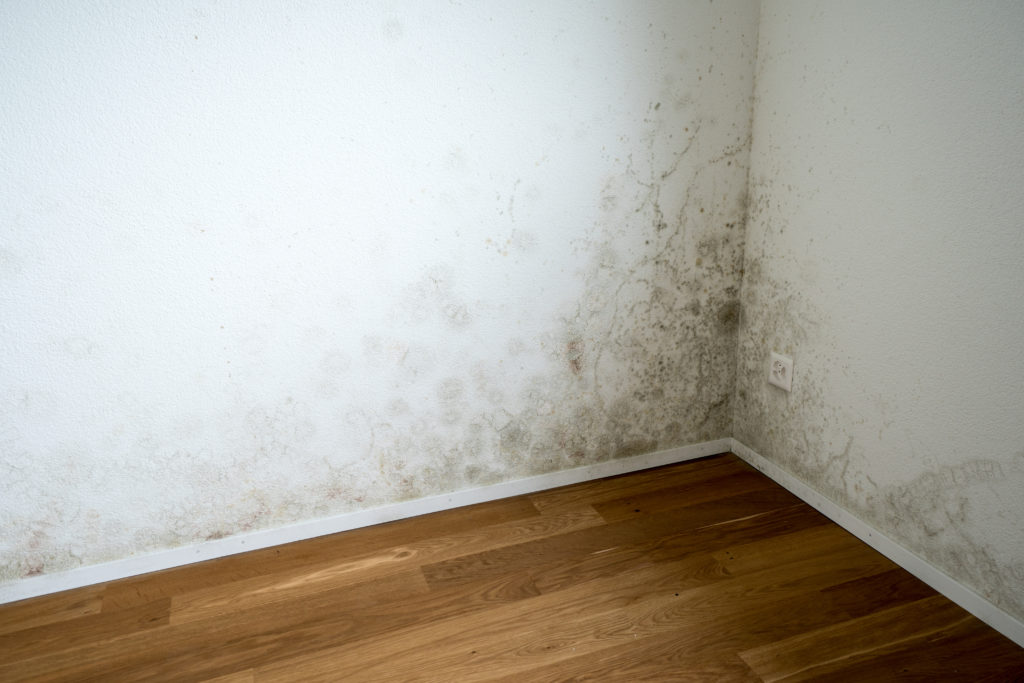
In the winter months, mold growth commonly occurs on the exterior of drywall, sheet rock, and other surfaces located at bends and corners in the home. Corner rooms have higher relative humidity levels than surrounding rooms because they are exposed to much cooler air. The adjoining rooms, on the other hand, have the same water vapor pressure, resulting in conditions that can develop and sustain mold growth in the winter.
Basements that have a history of leaks or flooding are also prone to mold growth during winter, as well as on windows with condensation, and areas with limited air circulation, such as behind walls or in confined closets or attic spaces. Mold spores can also grow on cellulose-rich substances.
How can I prevent mold growth during winter?
The number one tip to avoid mold growth during winter is to keep the relative humidity of your home below 60%. Ideally, the relative humidity should be between 35-45%. It’s also imperative to fix any leaks in your home as soon as possible so as to not let mold have the chance to start growing. Lastly, be careful and mindful with the items you store away for winter and make sure to keep mold prone areas nice and clean. When possible, use plastic tubs rather than cardboard boxes to store away items as mold feeds on organic materials to survive.
Mold Treatments and Disinfection & Sanitation Services
If it comes time to have a mold treatment, have it done right the first time with Jersey Shore Crawlspace Enhancement. Our highly trained technicians perform a two step treatment to clean your home’s wood structure and surfaces, kill any mold, and inhibit any future growth. We analyze the conditions to determine additional measures to adequately protect your home from future mold growth. This means that we not only take care of the current mold problem, but we address the source to make sure that it doesn’t return.
All of our mold treatments come backed with a 10 year transferable warranty in the event that you sell your home. Following the application of the two materials applied, our technicians ensure that the material penetrates the wood for decades of protection.
Click the button below to speak to a representative or complete the form at the bottom of this page and a representative will contact you.